The Beaches of Antigua: How to Choose by Coast
How the northwest, southwest, south and east coasts differ, and which beaches suit which kind of day.
In this guide
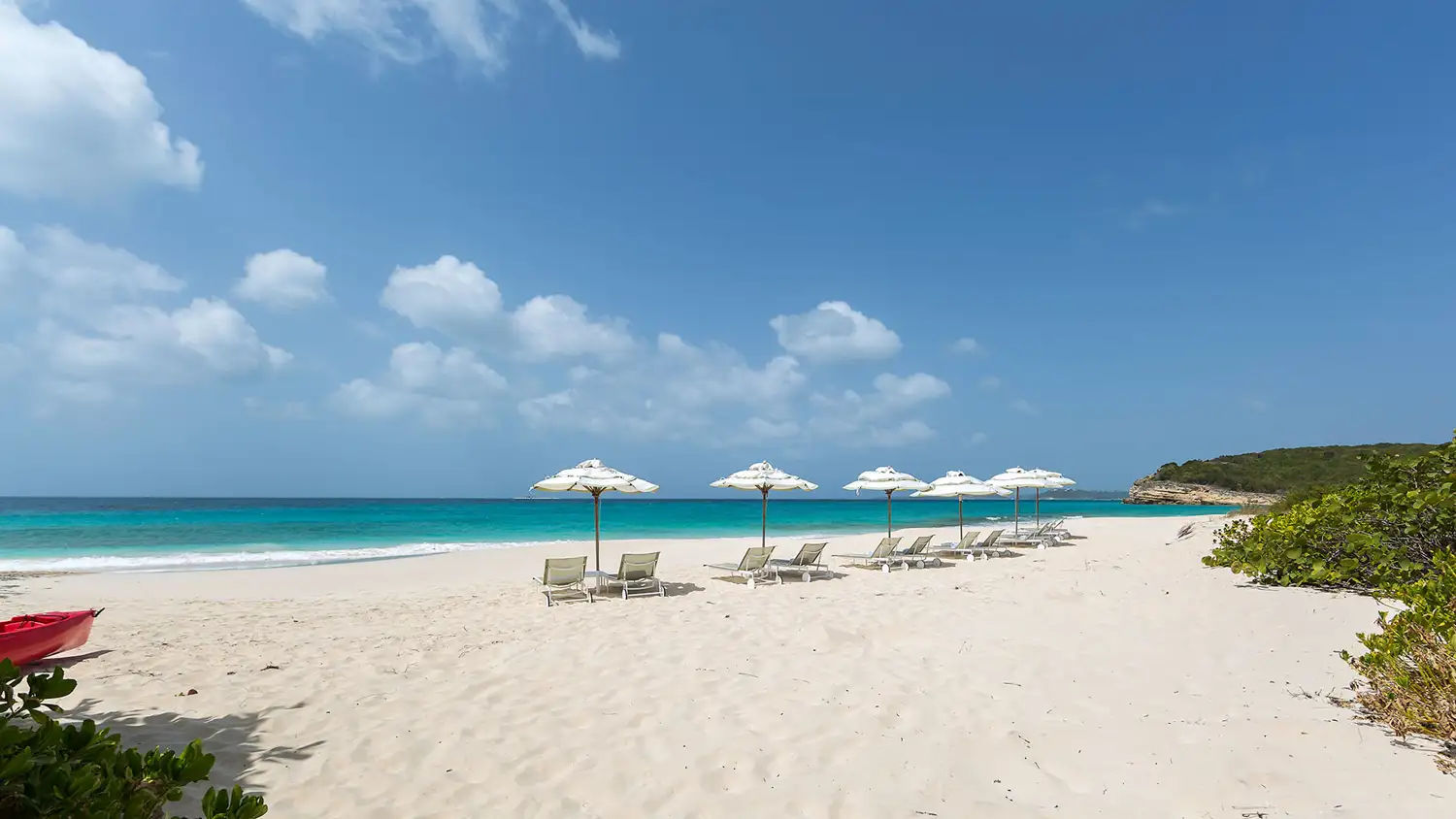
Antigua’s tourism board markets the island as having 365 beaches, one for every day of the year. Whether or not you count them all, the choice is wide, and the coasts feel quite different. This guide groups some of the best-known beaches by area. The beaches of Antigua vary by coast and exposure.
The northwest
Dickenson Bay and Runaway Bay are classic resort beaches north of St John’s, with hotels, water sports and places to eat and drink. Fort James and Deep Bay, close to the capital, are popular with locals and visitors. The Hawksbill area has several crescent-shaped beaches; the tourism board notes that one is used for nude sunbathing.
The west and southwest
Ffryes Bay and Darkwood are long, open beaches on the west coast, known for their sunsets and a quieter feel. Farther south, Johnson’s Point has a well-known beach bar nearby. Rendezvous Bay and Doig’s Beach on the south coast are especially quiet, as the tourism board notes they are reached only by four-wheel drive or on foot.
The south
Pigeon Point, near Nelson’s Dockyard and English Harbour, combines a sheltered beach with easy access to the harbour’s restaurants and history.
The east
Half Moon Bay is one of the island’s most celebrated beaches and, according to the tourism board, is now a national park. Long Bay is described as completely protected by its reef, which makes it popular with families. Nearby, Devil’s Bridge is a natural limestone arch on the rugged coast; admire it from a safe distance, as waves can surge through.
Offshore and Barbuda
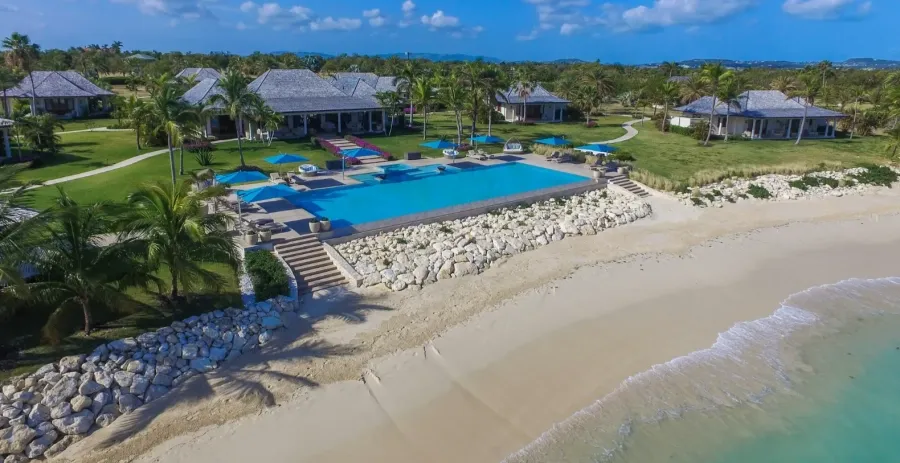
Boat trips reach small islands off Antigua’s coast, and Barbuda, the sister island, is known for pink- and white-sand beaches protected by a barrier reef. Jumby Bay Island, a private island, has its own beaches for resort and villa guests; see our guide to Jumby Bay Island.
Access, facilities and exposure, beach by beach
What the tourism authority publishes, as of September 2026, and what it does not. It gives no lifeguard, parking or seasonal seaweed information for any beach, so treat those as unconfirmed.
- Dickenson Bay (northwest, Caribbean side): described as the most developed beach on the island, with hotels, restaurants, water sports and shallow, calm water. Public access, full facilities; the trade-off is crowds.
- Fort James: a locally popular public beach near St John’s. Hawksbill: four crescent beaches, one used for nude sunbathing.
- Jolly Beach (west): a mile of sand at Jolly Harbour with restaurants, water sports and shops nearby; 16.4 km from the airport. Suits families who want to walk to everything.
- Darkwood (southwest): one of the longest stretches on the island, with Montserrat visible on clear days; 18.7 km from the airport. The authority’s page shows a beach restaurant but lists no other facilities. Johnson’s Point has Turner’s Beach Bar and Grill.
- Rendezvous Bay and Doig’s Beach (south): reached only by four-wheel drive or footpath, no facilities listed. Not for a car with a low clearance or a group with small children.
- Pigeon Point (English Harbour): a stop after Nelson’s Dockyard, with Catherine’s Café on the beach.
- Long Bay (east, Atlantic side): the authority says it is completely protected by its reef, with vendor kiosks, a restaurant and the Pineapple Beach Club at its west end; 21.1 km from the airport and about five minutes from Willikies.
- Half Moon Bay (east): a national park; the authority lists kite surfing among its activities, which signals wind and open water rather than sheltered swimming. No facilities are published.
- Jabberwock (northeast): a mile-long beach that the authority calls the home of Kitesurf Antigua, suited to body and wind surfing, with picnic tables; 3.6 km from the airport.
In short, the Caribbean-facing west and northwest beaches are the calm, serviced options, the east coast is exposed to the Atlantic except where a reef intervenes, and the south-coast bays trade facilities for solitude. What is Antigua? explains how the coasts fit together, and getting to Antigua covers the temporary driving permit you will need to reach the remoter ones.
Choosing among the beaches of Antigua
- Facilities and water sports: Dickenson Bay or Runaway Bay.
- Sunsets: the west coast, such as Ffryes Bay or Darkwood.
- Families and calm water: reef-protected Long Bay.
- Seclusion: Rendezvous Bay or Doig’s Beach.
- History nearby: Pigeon Point.
Safety and etiquette
- Conditions change with wind and swell; the Atlantic-facing east coast can be rougher.
- Many beaches have no lifeguards.
- Protect reefs: do not stand on coral or touch marine life.
- Bring water and shade to undeveloped beaches.
The beaches of Antigua reward exploring more than one coast. For a base near your favorite beach, read where to stay in Antigua.