What Is Puerto Vallarta? The City, the Bay and Its Neighborhoods
A port city on Banderas Bay with a historic center, hillside neighborhoods and boat-only beaches to the south: how the pieces fit together.
In this guide
In short
Puerto Vallarta is a Jalisco port city on Banderas Bay, with its airport inside the urban area. It stretches from Marina Vallarta past the historic center and the Romantic Zone to the hillsides of Amapas and Conchas Chinas and a south shore where water taxis reach beaches with no road. Punta Mita lies across the bay in Nayarit.
What is Puerto Vallarta? It is a working Mexican city in its own right rather than a resort strip: a port town on Banderas Bay in the state of Jalisco, backed by the forested Sierra Madre, with a historic center, a seafront promenade and neighborhoods that change character every few kilometres. For villa travelers it is also a gateway to a much wider coast, from Punta Mita and the Riviera Nayarit to the north to the boat-only coves of the south shore and, beyond them, the Costalegre. Understanding how those pieces fit together is the first step in planning a stay here.
Where Puerto Vallarta sits
Puerto Vallarta lies on the eastern shore of Banderas Bay, one of the largest bays on Mexico’s Pacific coast. The city belongs to Jalisco; the Ameca River, just north of the airport, marks the border with Nayarit, where Nuevo Vallarta, the Riviera Nayarit resorts and Punta Mita sit along the northern arc of the bay. Puerto Vallarta International Airport (PVR) is inside the urban area, about one kilometre north of Marina Vallarta and roughly 7.5 kilometres from the city itself, which is why many trips here begin with a short transfer rather than a long one.
What is Puerto Vallarta made of? The main areas
The city runs along the bay from the airport in the north to the mountains in the south. Each stretch suits a different kind of trip:
- Marina Vallarta, beside the airport, with the marina, a golf course and large resorts.
- The Hotel Zone, a line of beachfront hotels between the marina and the center.
- Centro and the Malecón, the historic center and its seafront promenade, the city’s social heart.
- The Romantic Zone, the older neighborhood south of the Cuale River and west of Insurgentes Street, with Los Muertos beach and pier, Olas Altas and Basilio Badillo street, and many of the city’s restaurants and galleries.
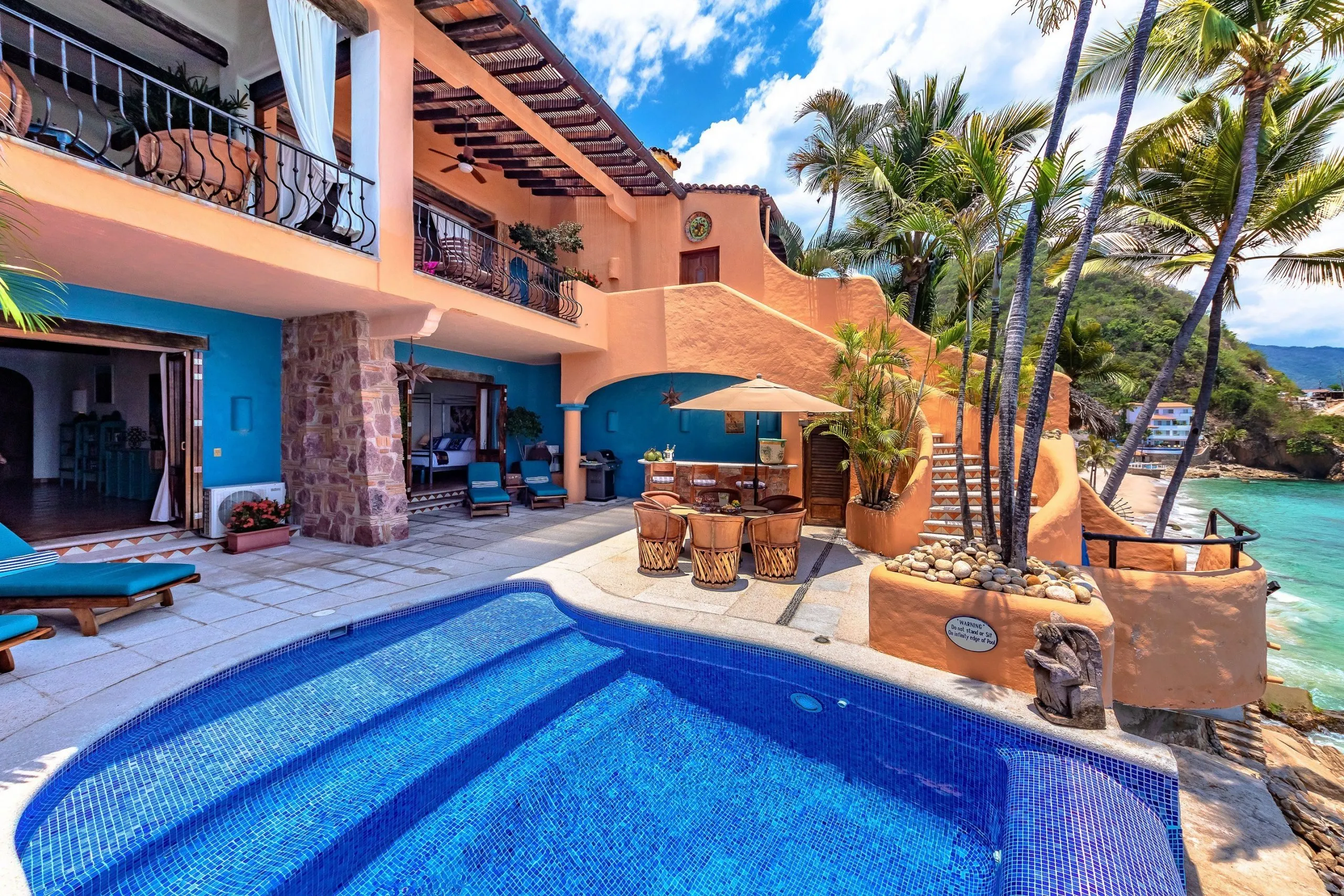
- Amapas and Conchas Chinas, hillsides rising just south of the Romantic Zone, where homes step down toward small coves; see Conchas Chinas and Amapas.
- The south shore, where Highway 200 follows the coast past Mismaloya to Boca de Tomatlán, and water taxis continue to beaches with no road access; see the south shore of Puerto Vallarta.
Puerto Vallarta and the rest of Banderas Bay
The bay itself is part of the draw. In winter, humpback whales gather in its waters, and boat trips leave from both the city and the Nayarit side; our guide to whale watching in Punta Mita covers the season and how to choose a tour. The Marietas Islands lie off the northern tip. Because the bay is shared, many travelers combine a few nights in the city with time in Punta Mita, or base themselves in one and visit the other.
Food, art and the old town
Much of Puerto Vallarta’s appeal lies away from the sand. The Romantic Zone concentrates the city’s restaurants and cafés, many with outdoor tables, along with galleries showing national and international artists. A farmers’ market with more than eighty local vendors runs on Saturdays at Lázaro Cárdenas square, and the Los Muertos pier, opened in 2013 and lit up at night, has become a landmark at the end of Francisca Rodríguez street. North of the Cuale River, the Malecón promenade links the historic center with the sea and is where much of the city comes to walk in the evening.
For villa guests, this is the practical advantage of Puerto Vallarta over more isolated coasts: a private chef can cover breakfasts and a few dinners, and the town can cover the rest.
Weather and the shape of the year
The official tourism board describes average temperatures from the mid-80s Fahrenheit in winter to the mid-90s in summer, with a rainy season from June to October. Winter and spring are the busiest months; summer brings heat, humidity, afternoon storms and fewer visitors. Our guide to the best time to visit Puerto Vallarta explains how the seasons affect a trip.
Who Puerto Vallarta suits
- Travelers who want a real town, with walkable streets, restaurants and nightlife, alongside the beach.
- Groups who want a villa on the hills above the bay and easy access to dinner in the Romantic Zone.
- Short trips, since the airport is close to most neighborhoods.
- Less suited: anyone looking for a single self-contained resort enclave, which the Riviera Nayarit and Punta Mita offer instead.
So what is Puerto Vallarta, in practice? A city first and a beach destination second, and all the better for it. Start with where to stay in Puerto Vallarta to choose a neighborhood, then getting to Puerto Vallarta for arrivals and transfers. If you are looking for villas with a full household team, read fully staffed villas in Mexico.