Northern Lights in Levi: Where to Watch and the Odds by Month
In this guide
[HERO IMAGE — none available. We hold no photograph of the aurora over Levi. Remove this line at publication.]
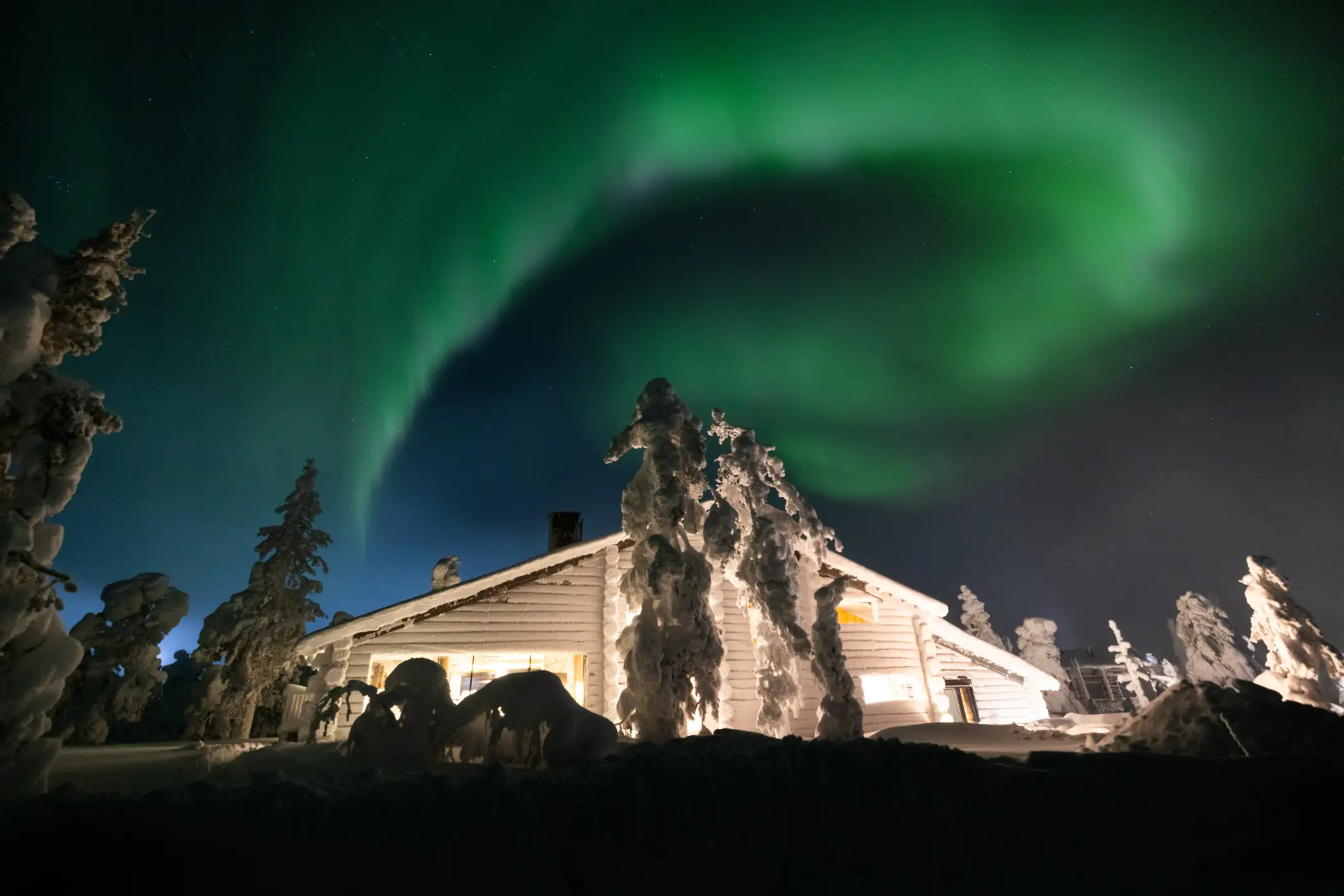
The northern lights in Levi are common, not rare. The Finnish Meteorological Institute (FMI) puts the chance of seeing them at roughly half of all dark, cloudless nights in central Lapland, and it names Levi as one of its examples. The catch is in that condition. You need darkness, a clear sky and some patience, and only the first of those is predictable.
How often the aurora shows over Levi
FMI’s figures are for a dark night with no cloud. On such a night the chance is about 75% at Kilpisjärvi in the far north-west, roughly 50% in central Lapland, where FMI lists Levi, Ylläs and Saariselkä, and roughly 25% around Oulu and Kuusamo. FMI’s general page says the same thing another way for Sodankylä, east of Levi: every second night there is an auroral night.
You will see other numbers. Levi’s own visitor site says the lights can be seen 111 times a year on average, and Visit Finland gives roughly 200 nights a year for northern Finland. Neither explains how it was counted. We use FMI’s figures, because FMI is the agency that measures the aurora.
The northern lights in Levi, month by month
The aurora itself is not very seasonal. FMI says displays occur fairly evenly through the year, slightly more often around spring and autumn. What changes from month to month is whether you can see them.
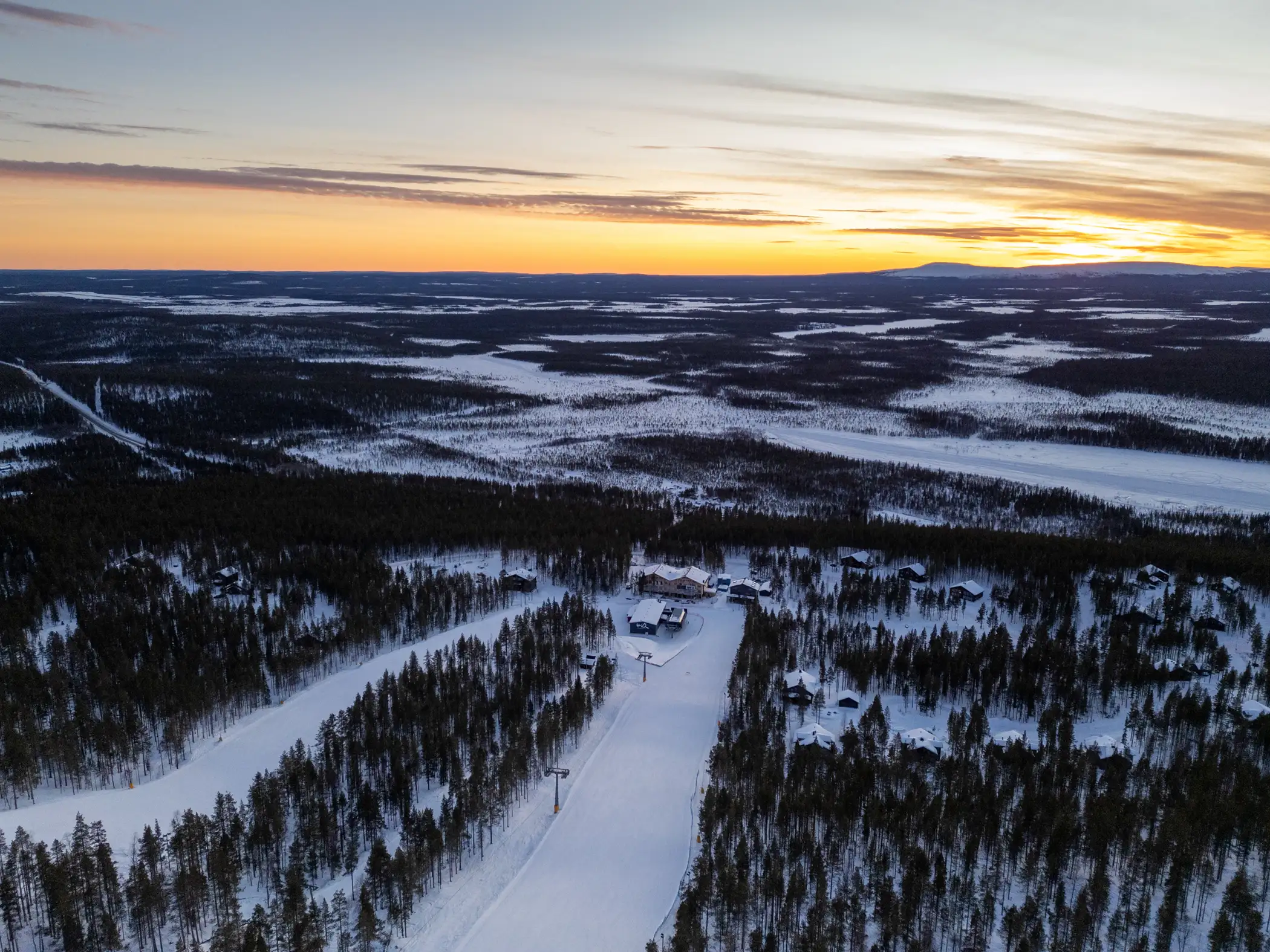
- Late August to October. Levi’s visitor site starts its aurora season in late August. The nights are short at first and lengthen quickly. Levi notes that autumn, before the snow, is the easiest time to photograph the lights, because the dark ground scatters the least light.
- November to January. The longest nights of the year. In the darkest weeks Levi says displays can start after 5 pm. These are also the coldest months, and cloud decides most nights.
- February to early April. FMI’s main page names February–March, along with September–October, as the strongest months. Its space-physics team goes further: once the weather is counted, March and early April are the most promising time in northern Finland. This guide follows that advice.
- Mid-April to mid-August. The nights become too light. Levi ends its season at the end of April, and FMI is plain about summer: the light nights hide the aurora.
What has to line up
Three things: darkness, a clear sky and enough activity. Darkness is a matter of the hour. FMI gives 9 pm to 1 am local time as the usual window, and its space team describes displays clustering around midnight, a couple of hours either side. They can appear at any dark hour, though, so a late dinner outside is not wasted.
Cloud is the part nobody can give you odds on. FMI publishes no monthly cloud figures for Kittilä, so we give none. Check the cloud forecast on the day; FMI links a live cloud map beside its aurora forecast. Levi’s site adds one useful local point. When low cloud sits over the valley, the tops of Levi or Kätkä fell may be above it.
Where to watch around Levi
Levi’s official aurora map names five places: Lake Immeljärvi, the top of Levi fell (with free parking at the end of Tunturitie), South Point, a spot on Muoniontie and one on Tuomikuruntie. The point of each is the same: get away from the village lights to somewhere with a clear view to the north.
The map comes with rules worth keeping. Walk on Immeljärvi only after the winter trails have officially opened, and keep away from its north end, the river mouth and the ice hole by the sauna bar, where the ice is thin. Walking on snowmobile and ski trails is not allowed, private yards are off limits, and at Tuomikuruntie you should use only the marked winter walking trail. We found no published rule on walking the ski slopes at night, so stay on roads and marked trails.
Forecasts and alerts
FMI’s live service shows a map and a 24-hour chart of what it calls the R-index, measured by its magnetometers. Above the lower threshold, auroras are possible but usually dim. Above the upper one, FMI says it is very likely that you can see them. It is a web page, not a push alert, and we found no alert service from FMI itself. Levi’s site points visitors to third-party apps instead, naming Aurora Alert Realtime and Northern Lights Alert. FMI’s daily written forecast gives probabilities for southern and central Finland, not for Lapland, where it notes auroras are common even when space weather is quiet.
One thing we have left out on purpose is the solar cycle. NASA and NOAA declared the solar maximum of Cycle 25 in October 2024, but we found no primary source on where the cycle stands now, so the odds above do not depend on it.
Practical limits
Nothing about the northern lights in Levi is a promise. The 50% applies only to nights that are dark and clear, and a week of cloud happens. Give yourself several nights rather than one. Clear nights are also cold nights, which FMI says is practically always the case in Finland; our guide to Levi winter weather explains what −25 °C means in practice. Levi lists aurora outings by snowshoe, snowcat, car, snowmobile and dog or reindeer sleigh, and our guide to husky safaris in Levi compares the sled options. If you are travelling with children, Levi with kids covers the late hours and the cold rules.
Staffed villas in Levi
-

Villa Utsuvaara
Utsuvaara
7 bedrooms · Sleeps 14
-

Villa Serenity
4 bedrooms · Sleeps 8
-

Copper Lodge
5 bedrooms · Sleeps 18