Punta Mita Beaches
Which beach suits swimming, surfing or a day by the water, how to reach each one, and what the conditions are.
In this guide
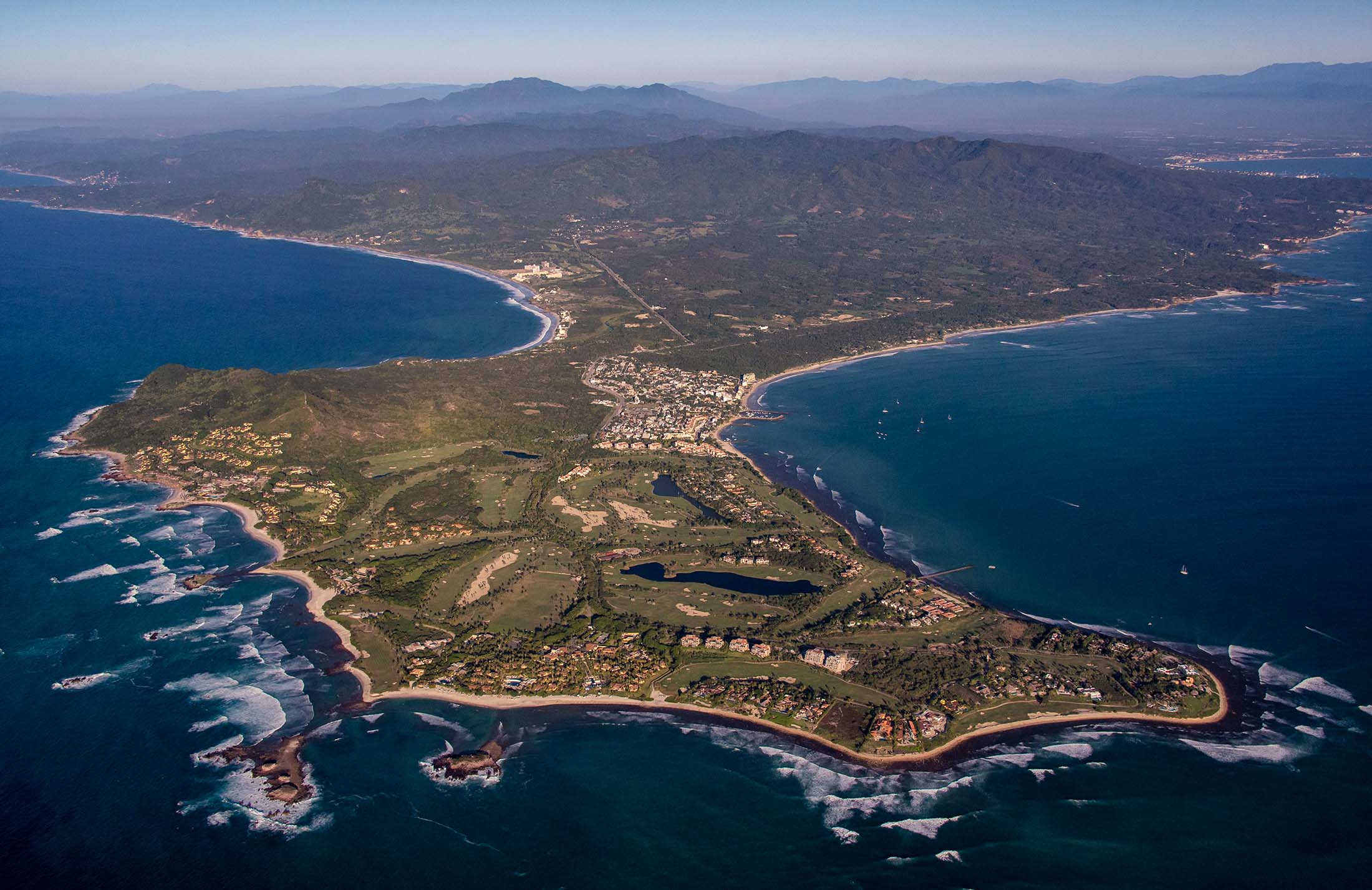
Punta Mita’s coast wraps around a peninsula, with the Pacific on one side, Banderas Bay on the other and Litibú Bay to the north. Its beaches differ in what they’re good for: some are calm enough for children to swim, some are known for surf, and some you reach only on foot or by boat. This guide sorts them by what you want from a beach day. For the wider trip, see our guide to planning a first trip to Punta Mita. Use it to match Punta Mita beaches to the kind of day you want.
How Punta Mita beaches work
Under Mexican federal law, the beaches themselves are public. The national property law makes sea beaches, and the strip of federal land beside them, common-use property that anyone in Mexico may use, and it forbids blocking or conditioning access to them except where its regulation allows. Where no public road or path reaches the shore, the owners of the neighboring land must allow access through routes agreed with the environment ministry.
In practice, the development on the peninsula is private and gated. Its residents’ beach clubs are for property owners and their guests, and the Four Seasons describes one of the beaches at the resort as exclusive to its guests. Outside the gates, the town beach and Destiladeras, east along the coast, are open to visitors, and Destiladeras gained a formal public access in August 2025.
The town beach: Playa El Anclote
El Anclote, also called Playa Punta de Mita, is the beach in front of the town. The municipality describes its water as usually calm through the year, clear and turquoise, and shallow to moderately deep, and calls it ideal for families and children to swim. Seafood restaurants sit along the sand. Its waves break long and small, which makes it one of the favorite spots for first-time paddleboarders, and the village has surf schools.
Boats to the Marietas Islands leave from several points along the coast. The municipality says most visitors hire theirs from this beach, the closest to the islands.
In its June 2026 sampling before the summer holidays, Mexico’s health regulator, COFEPRIS, measured 23 enterococci per 100 milliliters here, well under the limit of 200 it uses to rate a beach suitable for recreational use. Results change from season to season, so check the latest before you go.
Beaches for swimming
Outside the development, three beaches are officially described as calm or family-friendly:
- El Anclote, in the town: usually calm through the year, according to the municipality.
- Litibú, by the village of Higuera Blanca northeast of the peninsula: a long stretch of golden sand and gentle waves that the municipality calls ideal for swimming.
- Destiladeras, a five-kilometer beach on Banderas Bay east of Punta Mita: the tourism board describes warm, tranquil water and a family atmosphere along its length, with seafood restaurants under thatched roofs. Waves at its southern end can reach a meter and a half.
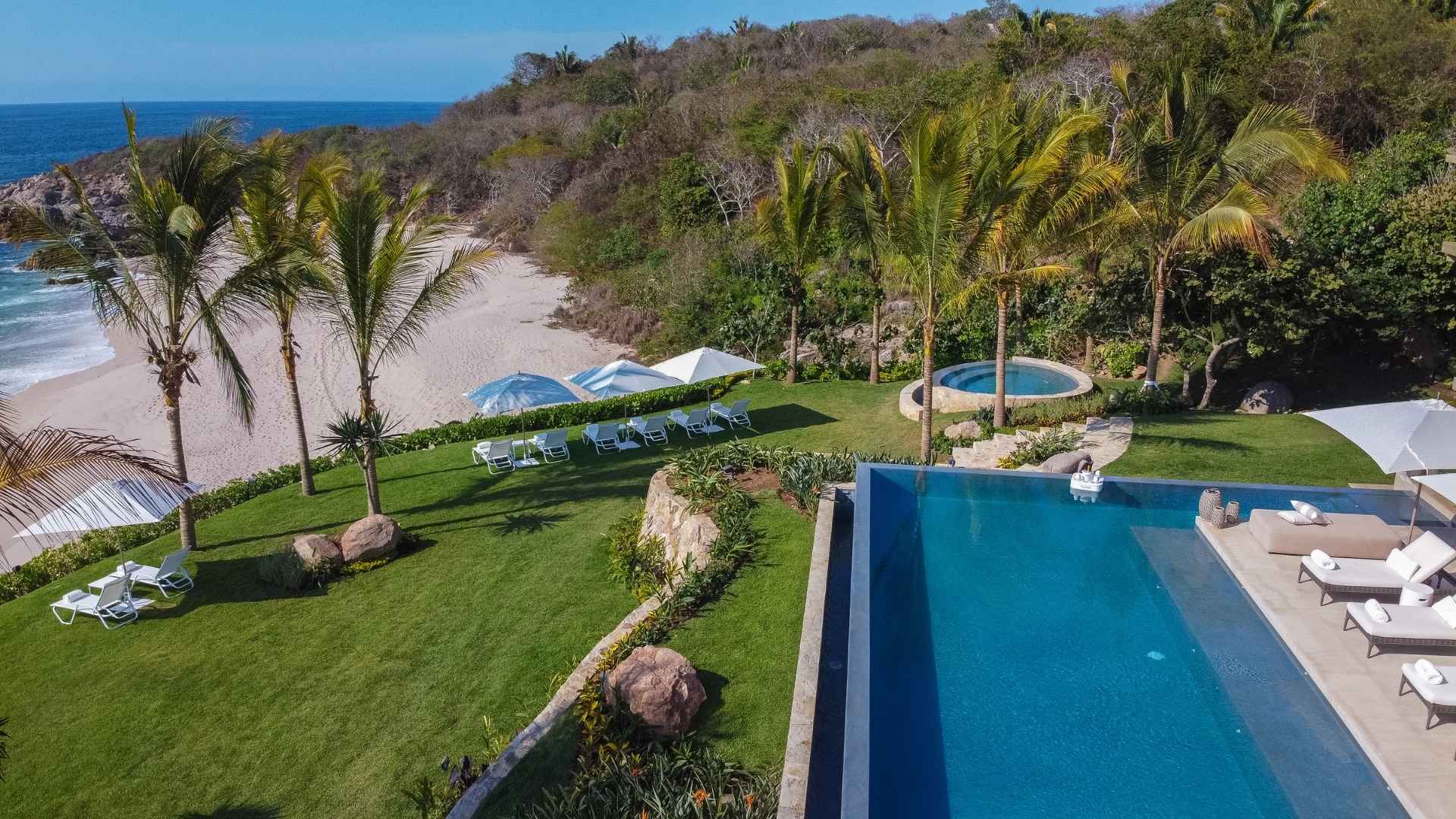
Inside the development, the calm water that official sources describe is at the clubs and resorts. The Kupuri Beach Club looks onto the clear, shallow water of Litibú Bay; the Sufi Ocean Club has direct access to the calm water of Banderas Bay from the Punta Mita pier; and the Four Seasons describes Cuevas and Manzanillas, the two beaches at the resort, as ideal for swimming.
Conditions change with the season and the tide, so check them locally before you swim.
Beaches for surfing
Surf breaks ring the peninsula. La Lancha has consistent waves that suit surfers of every level, according to the municipality, and El Anclote’s long, slow wave suits beginners on longboards. The municipality rates Punta Burros, east along the coast, for intermediate and advanced surfers. El Faro and The Cove, also called Playa La Bahía, are other named breaks, and the south end of Destiladeras gets bigger waves too.
Harder-to-reach beaches
La Lancha is reached on foot along a jungle path, or by panga, a small local boat; the tourism board puts the walk from Punta Mita at about 40 minutes. It’s a wide beach with an estuary at its southern end. The Cove is also about 40 minutes on foot from Punta Mita, or a panga ride.
Playa del Amor, also called Playa Escondida, is on the Marietas Islands, about nine kilometers off Punta de Mita, inside a national park: a white sand beach in a cave open to the sky. As the park authority listed them in September 2026, the park is open Tuesday to Sunday from 8 a.m. to 6 p.m., and Playa del Amor Wednesday to Sunday from 8 a.m. to 5 p.m. Its rules for visitors:
- Go with a tour operator that holds a park permit.
- Wear a life jacket in the water.
- Wear no footwear in the water or on the beach.
- Apply environmentally friendly sunscreen at least 30 minutes before you swim.
- Pay the daily park fee.
When the park authority reopened the beach in 2016, it limited visits to 116 people a day, in supervised groups of up to 15 who swim in at low tide, wearing helmets and without fins. Its current page doesn’t repeat those limits, so confirm the current ones with your operator.
Beach clubs and resort beaches
Two of the residents’ beach clubs overlook the Pacific: the Pacifico Beach Club, above the Pacifico course’s “Tail of the Whale” hole, and the Sea Breeze Beach Club at the St. Regis. The Kupuri Beach Club looks out on Litibú Bay, and the Sufi Ocean Club is on Banderas Bay. At the resorts, the Four Seasons describes Manzanillas Beach as exclusive to its guests, and the St. Regis has a beachfront setting facing the Pacific and the Marietas Islands.
Villas and residences within Four Seasons Punta Mita come with access to the Four Seasons hotel’s pools, restaurants, bars and spa, and to Punta Mita’s community amenities. Access does not mean that meals, drinks, spa treatments, golf or other services are included in the rental price. If you’re renting elsewhere in the development, ask which clubs your rental includes, and get it in writing before you book.
Our guide to choosing an area to stay explains what club access means for a rental.
Safety and conditions
Bahía de Banderas’ civil protection service has a lifeguard unit, and in April 2025 it reopened its base in Punta de Mita, with an ambulance and rescue equipment. Its notices don’t say which beaches have lifeguards on duty, so don’t assume a beach has one. When it issues a groundswell alert, expect heavy surf and dangerous rip currents: take the warning seriously, and follow the lifeguards’ instructions at all times.
Punta de Mita is one of three places on Mexico’s Pacific coast where hawksbill turtles nest regularly rather than now and then, according to the national conservation program for the species. Olive ridleys nest along the whole of Mexico’s Pacific coast, most heavily from August to October. Give any nest or hatchlings a wide berth.
The beach through the year
The best Punta Mita beaches for you depend on whether you want to swim, surf or simply stay put. Most of the year’s rain falls from June to October; November through May is the dry season. In the rainy season, the park authority warns, some days bring poor sea conditions for visiting the Marietas. Humpback whales are in the bay from December to March.