What Is Punta Cana? The Dominican Republic’s East Coast Explained
A region and a resort with the same name: how Puntacana Resort & Club, Cap Cana, Bávaro and the north coast fit together.
In this guide
Punta Cana is the name most travellers use for the whole eastern tip of the Dominican Republic, with more than 50 kilometres of white-sand beaches according to the Dominican tourism ministry, large resorts and several private gated communities. Strictly speaking, it is also the name of one of those communities. So what is Punta Cana, exactly? This guide untangles the names before you book.
What is Punta Cana? A region and a resort
Punta Cana lies in La Altagracia Province, within the municipality of Higüey. Development began in 1969, when a group led by the New York lawyer Theodore Kheel and the Dominican businessman Frank Rainieri arrived in an area then called Yauya or Punta Borrachón, according to Grupo Puntacana’s own history; the Punta Cana name belongs to the development that followed. Their company, Grupo Puntacana, went on to build Puntacana Resort & Club and the privately owned Punta Cana International Airport, which opened in the early 1980s. Today the name covers the wider tourist region as well as that original resort.
The timeline, according to Grupo Puntacana
Grupo Puntacana’s history page sets the sequence out. In 1969 a group led by New York lawyer Theodore W. Kheel and Dominican businessman Frank Rainieri arrived at a coast then called Yauya or Punta Borrachón and opened the 20-room Punta Cana Club. The airport opened in 1983, described by the group as the first private airport built for international commercial use, and in 1988 the company founded Fundación Ecológica Grupo Puntacana. Today Puntacana Resort & Club describes itself as 15,000 acres with 45 holes of golf, three hotels and estate neighbourhoods including Corales, Arrecife, Hacienda and Tortuga. That resort is the Punta Cana of the name; the region grew up around its airport.
The main areas
- Puntacana Resort & Club: the original gated community next to the airport, with hotels, villa neighbourhoods, a marina village and the Corales and La Cana golf courses.
- Cap Cana: a gated community to the south, with Juanillo Beach, a marina and the Punta Espada golf course.
- Bávaro: the busiest stretch, with a long beach, large all-inclusive resorts and the beachside neighbourhoods of El Cortecito and Los Corales.
- Macao and Uvero Alto: quieter beaches farther north; Macao is known for its surf.
Villas, resorts and gated communities
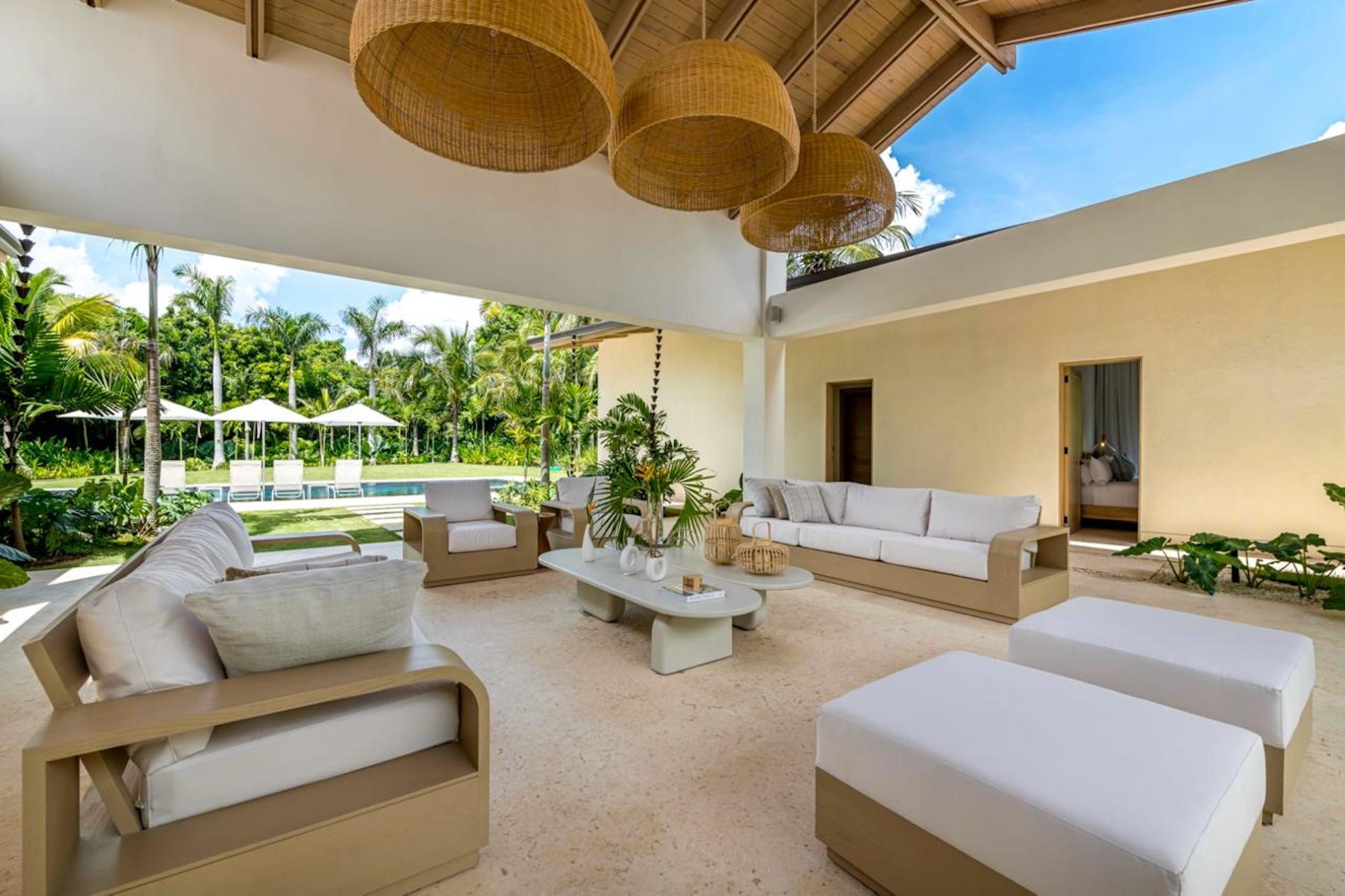
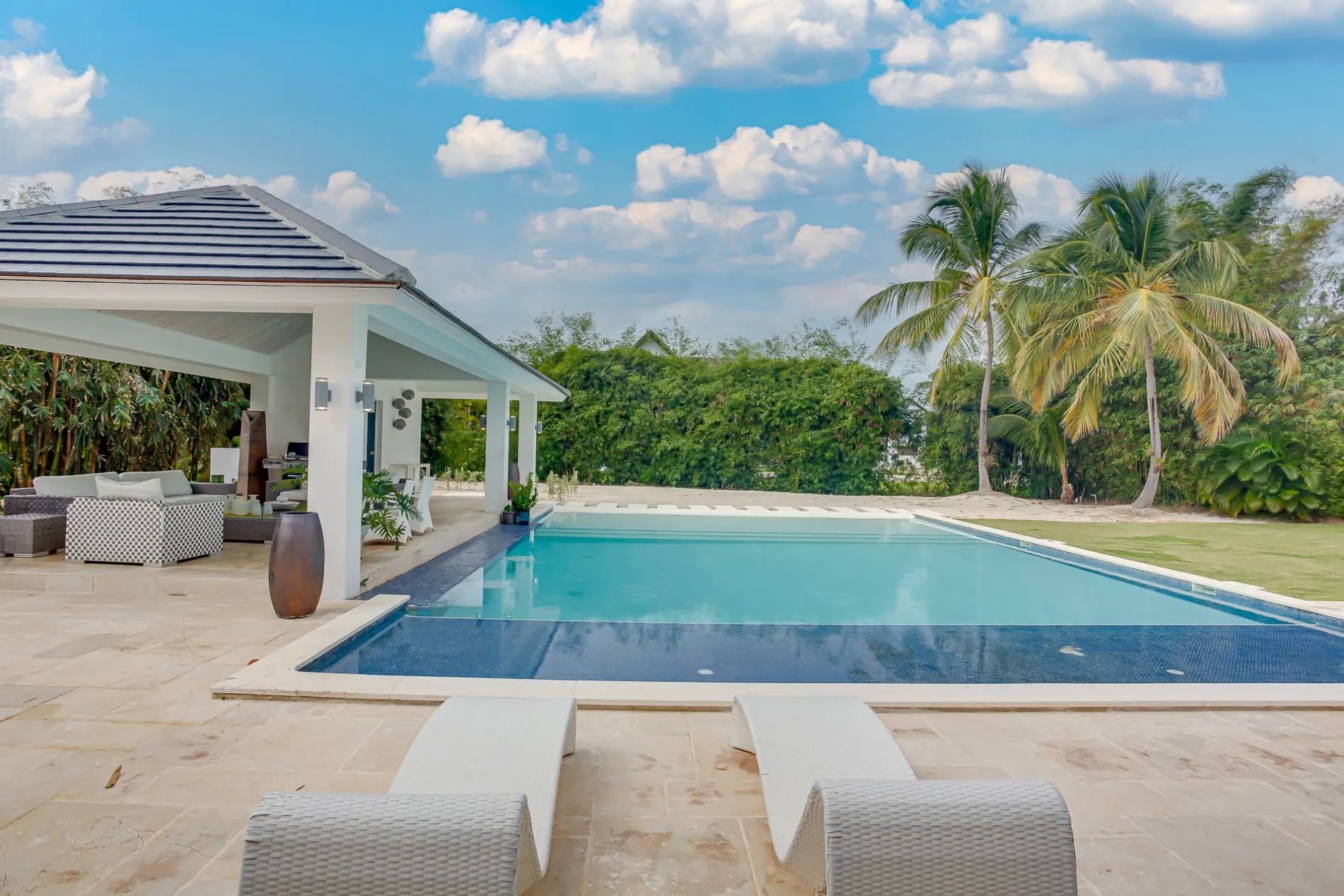
Most of the region’s large hotels are all-inclusive resorts, especially around Bávaro. Private villas are concentrated in gated communities such as Puntacana Resort & Club and Cap Cana, where guests have security, golf and beach clubs close by, and often staff such as a cook and housekeeper. Read where to stay in Punta Cana for a closer comparison.
Beaches and the sea
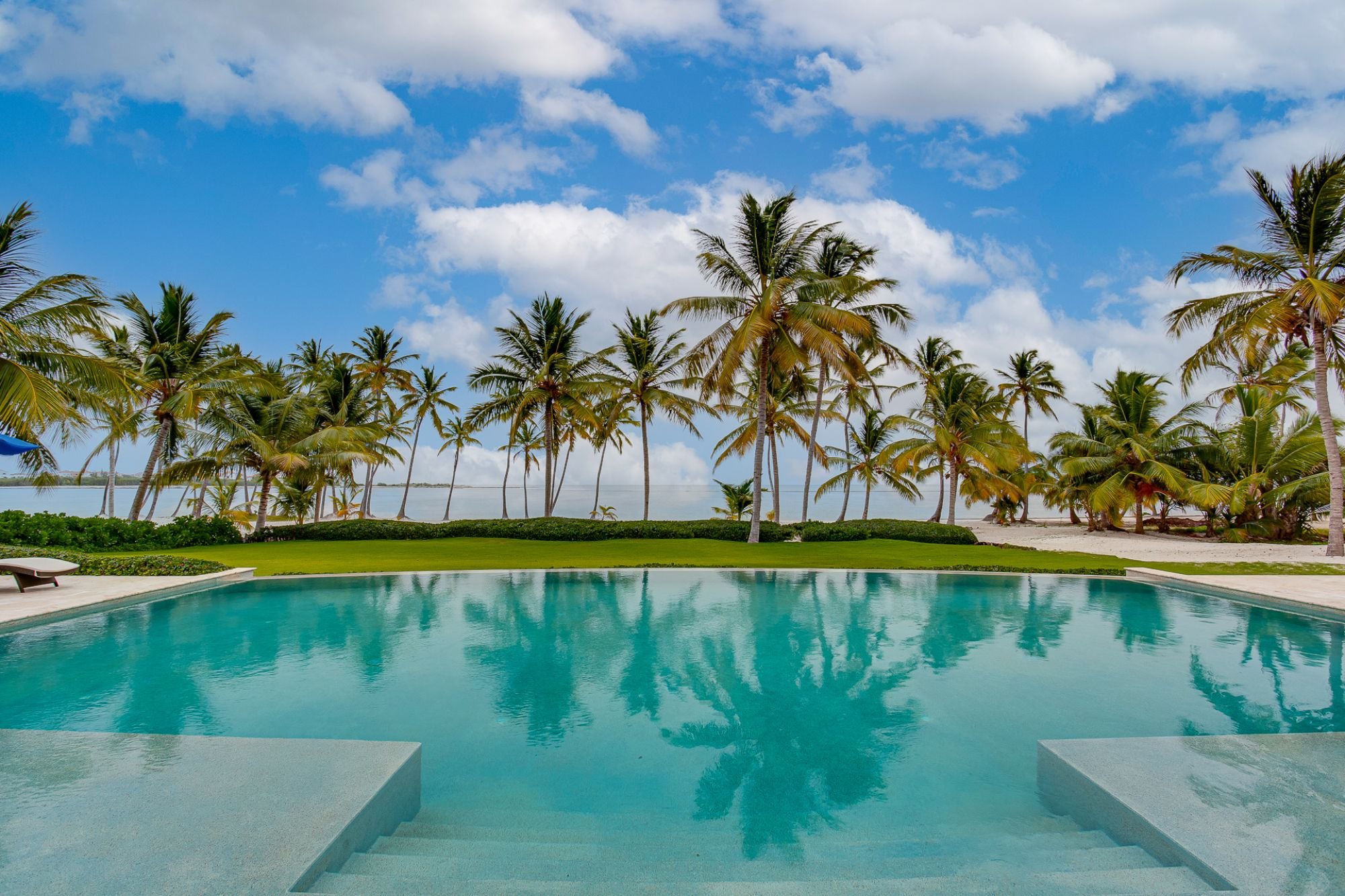
The coast faces both the Atlantic Ocean and the Caribbean Sea, and offshore reefs shelter parts of it. Conditions still vary: some beaches catch more wind and waves, and seasonal sargassum seaweed can wash up on east-facing shores. Ask about the nearest calm swimming spot when you book.
The airport and distances
The airport’s site, in September 2026, states more than 7.6 million international arriving passengers a year and service from 26 countries, 64 cities and 90 airports, making it the busiest airport in the country and second busiest in the Caribbean. Everything else sits close to it. Cap Cana puts itself 10 minutes from the terminal; Puntacana Village, with a school, churches and a supermarket, is a two-minute drive; the tourism board reckons La Romana under an hour away on the Oscar de la Renta Highway and Santo Domingo about two and a half hours. Airport practicalities are in getting to Punta Cana; the road west is covered in getting to Casa de Campo.
Who Punta Cana suits
- Golfers, with several highly rated courses within a short drive.
- Families and groups who want a staffed villa inside a gated community.
- Travellers who value easy flights; the airport has one of the widest route networks in the Caribbean.
- It suits less well those looking for historic towns or a strong local food scene on their doorstep; Santo Domingo is a better base for that.
Climate in brief
The tourism board describes the climate as warm and tropical year-round, between 25 and 32°C (77 to 90°F), with December to early March the most pleasant period. Humidity is highest from April to October, and the hurricane season runs from 1 June to 30 November with September the most active month. For a month-by-month view, read when to visit Punta Cana.
Beyond Punta Cana
Casa de Campo, about an hour southwest by road, offers a different kind of gated resort, built around Pete Dye golf and the village of Altos de Chavón. See what is Casa de Campo to compare.
What is Punta Cana, in one line? A region and a resort that share a name, and knowing the difference makes every other choice simpler. For flights and transfers, read getting to Punta Cana.