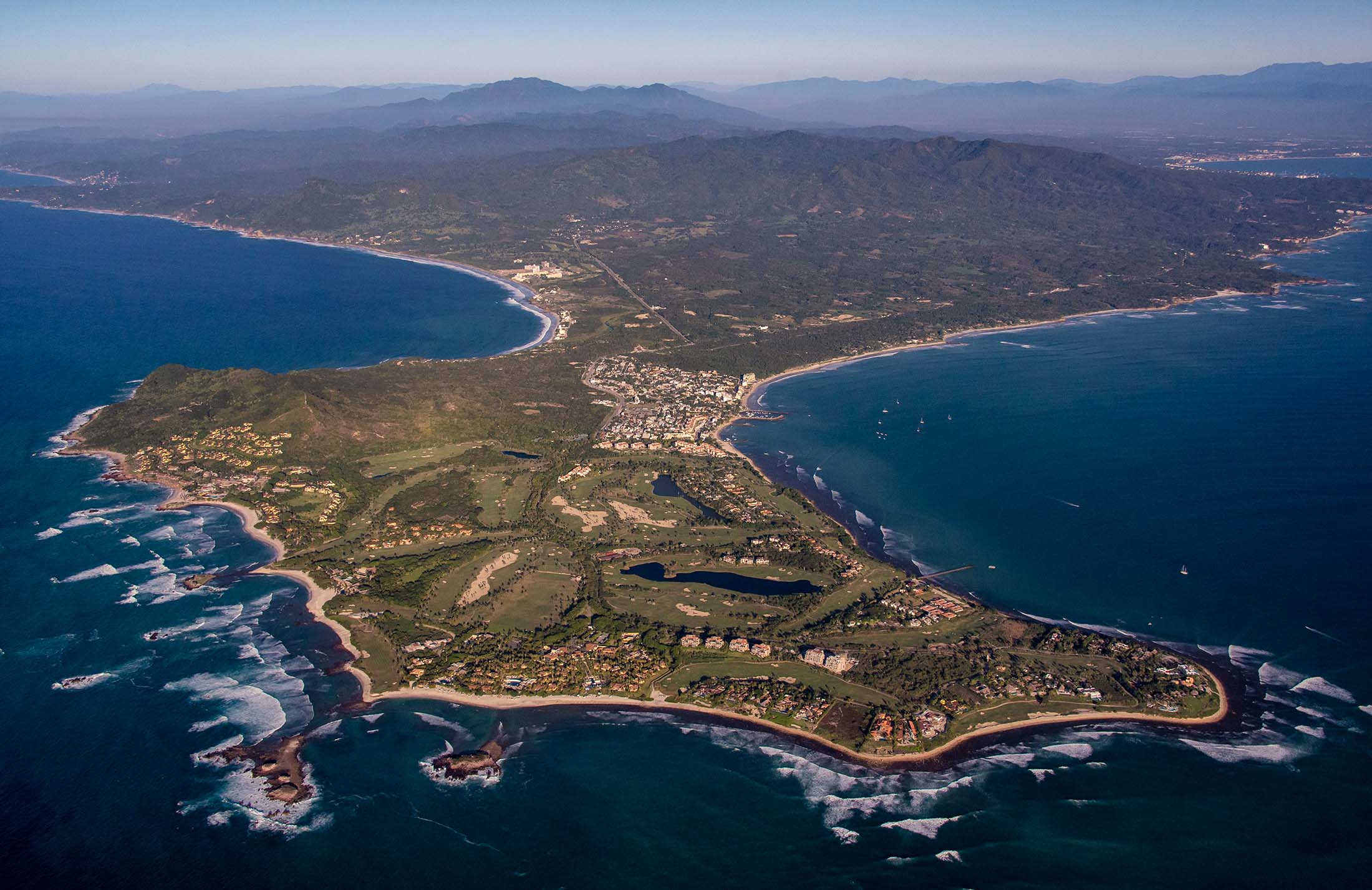
Best Time to Visit Punta Mita
Seasonal weather patterns, rainfall and activities to consider when choosing your travel dates.

In this guide
The most useful distinction when choosing dates for Punta Mita is rainfall. Regional climate records show much drier conditions in winter and spring than in summer. Whale watching adds a separate seasonal consideration, while the right month for you also depends on how flexible your outdoor plans are. The best time to visit Punta Mita therefore depends on how you balance those factors.
The best time to visit Punta Mita: the short answer
November to April is a useful starting point if lower rainfall is your priority. March and April have the lowest average rainfall in the regional record used here. For a trip focused on whales, consider the winter season and confirm the authorized tour dates for your travel year before booking.
What the rainfall record shows
Mexico’s national weather service publishes 1981–2010 climate normals for La Desembocada, a station about 33 kilometers east of Punta de Mita. The figures provide regional context; they are not measurements at your beach or a forecast for your travel dates.
| Month | Rain (mm) | Mean temp (°C) |
|---|---|---|
| January | 33.0 | 22.4 |
| February | 14.4 | 22.9 |
| March | 1.7 | 23.6 |
| April | 0.9 | 25.2 |
| May | 2.6 | 27.1 |
| June | 135.0 | 28.9 |
| July | 247.5 | 28.6 |
| August | 242.8 | 28.7 |
| September | 274.4 | 28.5 |
| October | 80.4 | 28.0 |
| November | 22.4 | 25.8 |
| December | 13.5 | 23.3 |
In this record, April averages less than one millimeter of rain and September more than 274 millimeters. June through September are markedly wetter than winter and spring, with October still receiving more rain than November. Monthly averages describe a long-term pattern, not how many clear days a particular stay will have.
Warmth through the year
Monthly mean temperatures range from 22.4°C in January to 28.9°C in June. These are averages across the day and night, not afternoon highs or sea temperatures. Consider how you handle heat when choosing dates for walking, golf or time outside.
May is another month to consider: its historical average rainfall is low, while its mean temperature is warmer than March or April. The record shows a substantial increase in rainfall from May to June. Use the pattern to compare months, then check forecasts closer to departure.
The whale window
The Riviera Nayarit tourism board describes mid-December through late March as a typical whale-watching window. That general description is not the annual authorization for tours. Confirm the current season’s dates and restrictions with an authorized operator.
For context, the federal notice for the completed 2025–26 season authorized observation in Bahía de Banderas from December 8, 2025, through March 23, 2026. Those dates do not establish the next season’s schedule. January and February fall within that past window and within the region’s historically drier months.
Planning around your dates
If your trip depends on a particular home, room layout, tee time or excursion, check availability before committing to flights. For holiday travel, compare your preferred dates with alternatives rather than assuming the same options will be available every week.
Compare accommodation quotes for your actual dates, including what each rate covers and the cancellation terms. This guide does not estimate a seasonal saving or promise that one month will be cheaper.
Planning a wetter-season trip
A trip from June to October calls for more flexibility around rain. The monthly record cannot tell you whether storms will arrive in the afternoon, whether a morning will stay clear or whether rain will last all day. Choose accommodation you would enjoy spending time in if an outdoor plan changes.
Check local forecasts and civil-protection notices before outdoor activities and follow any beach or boating restrictions. Lower rainfall does not guarantee calm seas, and a dry day alone does not establish safe swimming or boat conditions.
If you are travelling with the beach as the whole point, our guide to Punta Mita’s beaches covers how conditions vary along the coast, which matters more in these months than in the dry ones.
Choosing your month
For the lowest historical average rainfall in this regional record, consider March or April. For whale watching, confirm the authorized winter dates first. May combines low historical rainfall with warmer average temperatures; summer and early fall are wetter. Choose according to your priorities and leave room to adjust weather-dependent plans.
The best time to visit Punta Mita is ultimately the season that matches your main activities. For everything else that goes into the decision, start with our Punta Mita travel guide.