Is Los Cabos Safe? A Practical Travel Safety Guide
What the current travel advisory says, and the precautions that matter most: the ocean, heat, transport and airport sales.

In this guide
Most visitors to Los Cabos have trouble-free trips, but a useful safety answer is more specific than “yes” or “no.” The risks a traveler is most likely to meet here are not the headlines. They are the ocean, the heat, road travel, and ordinary tourist-area problems such as aggressive sales pitches and unlicensed transport. This guide covers what official advisories say, then turns to the practical precautions that matter most day to day. So, is Los Cabos safe? Here is what the official sources say.
What the U.S. travel advisory says
The U.S. Department of State assesses Mexico state by state. In the current Mexico advisory (reviewed September 2026), Baja California Sur, the state that includes Los Cabos, is rated Level 2: Exercise Increased Caution, citing crime and terrorism. The advisory also states that there are no specific travel restrictions for U.S. government employees in Baja California Sur, which is not the case for several other Mexican states.
Advisories are updated without notice, so read the current version before you travel rather than relying on this summary. U.S. citizens can also enroll in the State Department’s Smart Traveler Enrollment Program (STEP) to receive alerts. Travelers from other countries should check their own government’s guidance, which may be worded differently.
The ocean is the most important safety issue
In Los Cabos, the water deserves more respect than almost anything else. Many beaches, particularly on the Pacific side, have strong surf, rip currents and steep drop-offs that make swimming dangerous even on a calm-looking day. The municipality uses a beach flag system, and restrictive flags and closures are common during swell events.
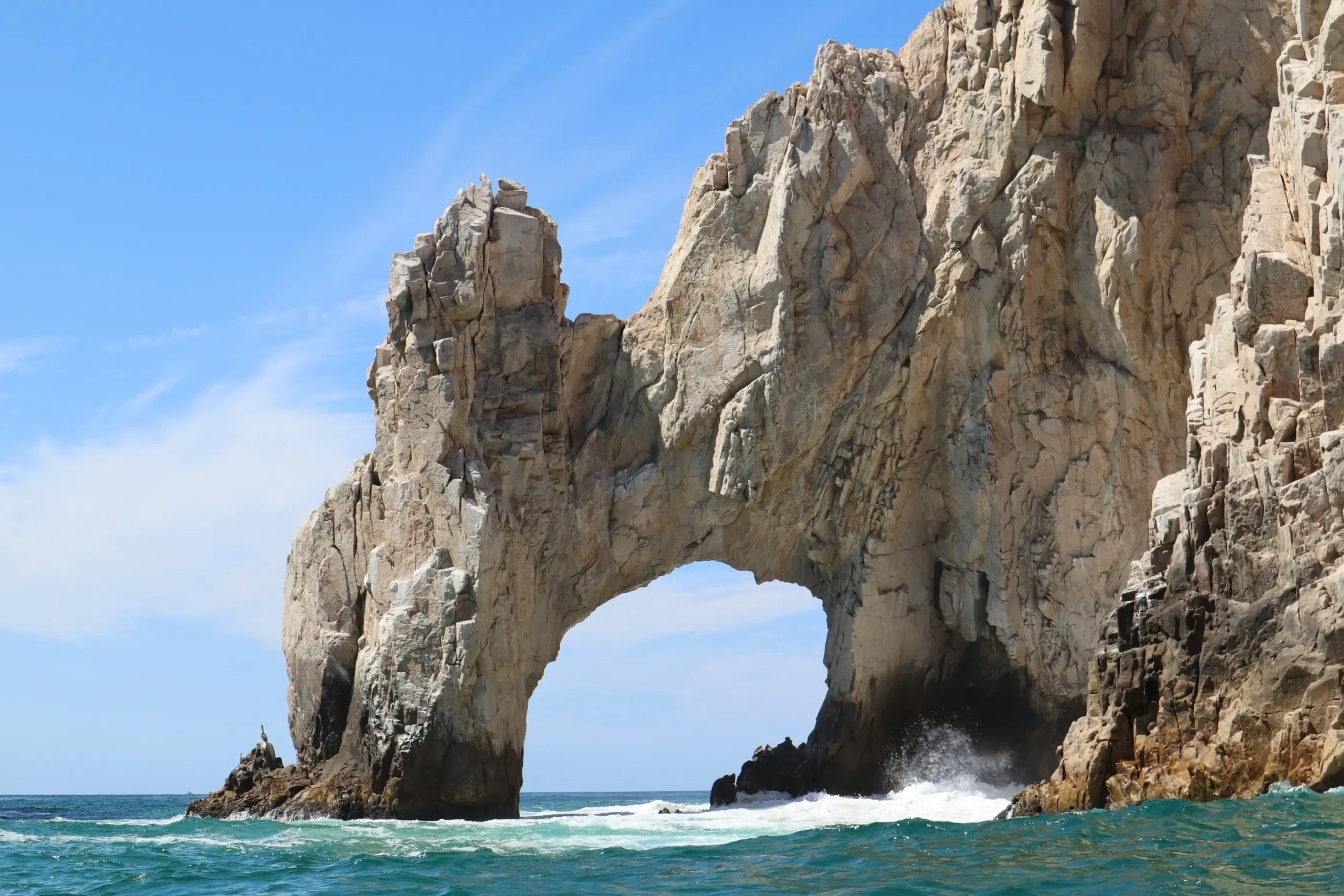
Choose a beach known for swimming, read the flag at your access point, and follow lifeguard instructions. Never swim at Divorce Beach on the Pacific side of Land’s End. Our guide to swimmable beaches in Los Cabos explains the flag colors and which beaches are commonly used for swimming.
On boat trips, confirm that the operator provides life jackets in the right sizes, and ask what happens if conditions change.
Heat, sun and hydration
Los Cabos is a desert destination. Summer and early autumn bring high temperatures and humidity, and the sun is strong year-round. Plan outdoor activity for the morning or late afternoon, carry water on excursions, and use sun protection. Travelers commonly drink bottled or purified water; ask your accommodation what is provided.
Hurricane season
Los Cabos sits in the eastern Pacific hurricane zone, where the season officially runs from May 15 to November 30. Most storms do not affect the destination directly, but some have caused serious damage and disruption. If you travel during the season, buy travel insurance that covers weather disruption, follow Mexico’s national weather service and local civil protection announcements, and follow any instructions from your accommodation. Our guide to the best time to visit Los Cabos covers the seasonal tradeoffs.
Arriving at the airport
The arrivals area at Los Cabos International Airport is where many visitors first meet high-pressure sales. People offering transport, tours or “information” may be promoting timeshare presentations. You do not need to stop. The simplest approach is to prearrange your transfer, know the company name and where to meet the driver, and walk directly to that point. Our guide to getting to and around Los Cabos explains the transport options.
Getting around safely
Use authorized airport transport, a prearranged transfer, or a taxi arranged through your hotel or host. If you drive, avoid driving on highways at night where possible, watch for livestock and speed bumps outside the main towns, and buy Mexican liability insurance, which is required for driving in Mexico. Keep valuables out of sight in parked cars.
In town, the usual big-city precautions apply: keep an eye on your belongings in crowded areas, use ATMs inside banks or shopping centers, and avoid displaying expensive items unnecessarily.
Nightlife and personal safety
Cabo San Lucas has an active nightlife scene around the marina and downtown. Stay with your group, watch your drinks, and agree on how everyone is getting home before the evening begins. Purchasing or using illegal drugs is both a legal and a personal-safety risk in Mexico and should be avoided entirely.
Villa and hotel safety
At a hotel, the property’s security arrangements are largely set for you. At a private villa, ask before booking: is the home in a gated community, is there on-site staff or security at night, is there a safe, and who do you call in an emergency? Families should also ask about pool barriers and balcony railings.
Emergencies
The national emergency number in Mexico is 911. Save your accommodation’s contact details, your country’s consulate information, and your travel insurance emergency line before you arrive. The U.S. maintains a consular agency in Los Cabos; check the U.S. Embassy’s website for current contact details and hours.
The practical answer: is Los Cabos safe?
Is Los Cabos safe for your trip? Check the current advisory before you travel and follow local guidance. Los Cabos is a destination where a few habits carry most of the weight: respect the ocean flags, prearrange airport transport, avoid driving at night, and check the current travel advisory before you leave. Those steps address the risks a typical visitor is actually most likely to face.