Sian Ka’an Biosphere Reserve: How to Visit from Tulum
What the reserve protects, how to reach it, the fees and rules, and whether to tour it or stay inside it.
In this guide
South of Tulum’s beach zone, the coast changes character. Hotels give way to mangroves, lagoons and long, empty beaches inside the Sian Ka’an Biosphere Reserve, one of the largest protected areas in the Mexican Caribbean. It is the best place near Tulum to see wildlife, and it rewards travelers who plan the visit carefully.
What Sian Ka’an is
UNESCO inscribed Sian Ka’an as a World Heritage site in 1987. The reserve covers around 528,000 hectares on the eastern coast of the Yucatán Peninsula, including tropical forest, palm savannah, wetlands, mangroves, lagoons, cenotes and a large marine area with part of the Mesoamerican reef. UNESCO records more than 330 bird species, and the reserve is home to animals including jaguars, manatees, spider monkeys and four species of nesting sea turtle. The name is commonly translated from Maya as “origin of the sky”. It is also a Ramsar wetland of international importance, designated on 27 November 2003 over 652,193 hectares, and the Ramsar listing describes a 120-kilometer barrier reef, two large shallow mangrove-fringed bays, numerous cenotes and about 320 bird species, with overfishing, increasing tourism, forest fires and invasive species named as the main threats.
Hours, fees and rules
CONANP, Mexico’s protected-areas commission, lists the reserve as open daily from 7:00 a.m. to 6:00 p.m. and charges a daily access fee per person, with exemptions for some visitors, including children under 12. Many tours include the fee; ask when booking. As published on CONANP’s Spanish-language page in September 2026, that fee is 225 pesos per person per day, with a 50 percent reduction for Mexican nationals and foreign residents on proof of status, a 75 percent discount for students and teachers with valid ID, and exemptions for seniors, pensioners, people with disabilities and children under 12.
CONANP lists a number of prohibitions, including sunscreen, campfires, removing plants or animals, littering, fishing, using unauthorized trails, pets and sound equipment. Use a hat and long sleeves for sun protection, and follow your guide’s instructions.
Ways to visit the Sian Ka’an Biosphere Reserve
- Lagoon and canal tours: boat trips across the lagoons and gentle floats through ancient Maya canals, often combined with a visit to the Muyil archaeological site on the reserve’s edge.
- Coastal tours: boat trips toward the fishing village of Punta Allen, with chances to see dolphins, turtles and birds, depending on the season and conditions.
- Birdwatching: early-morning outings with specialist guides.
Community-run cooperatives and licensed operators offer these tours. A guided visit is the best option for most travelers, as it handles transport, fees, boats and safety.
Driving in the reserve
The coastal road into the reserve is largely unpaved, and CONANP describes the route to Punta Allen as a dirt road of around 50 kilometers. Progress is slow, conditions change after rain, and services are very limited. Travel only in daylight, carry water and a spare tire, and check conditions before setting out. A rental car may not be insured for unpaved roads, so read the terms.
Staying inside the reserve
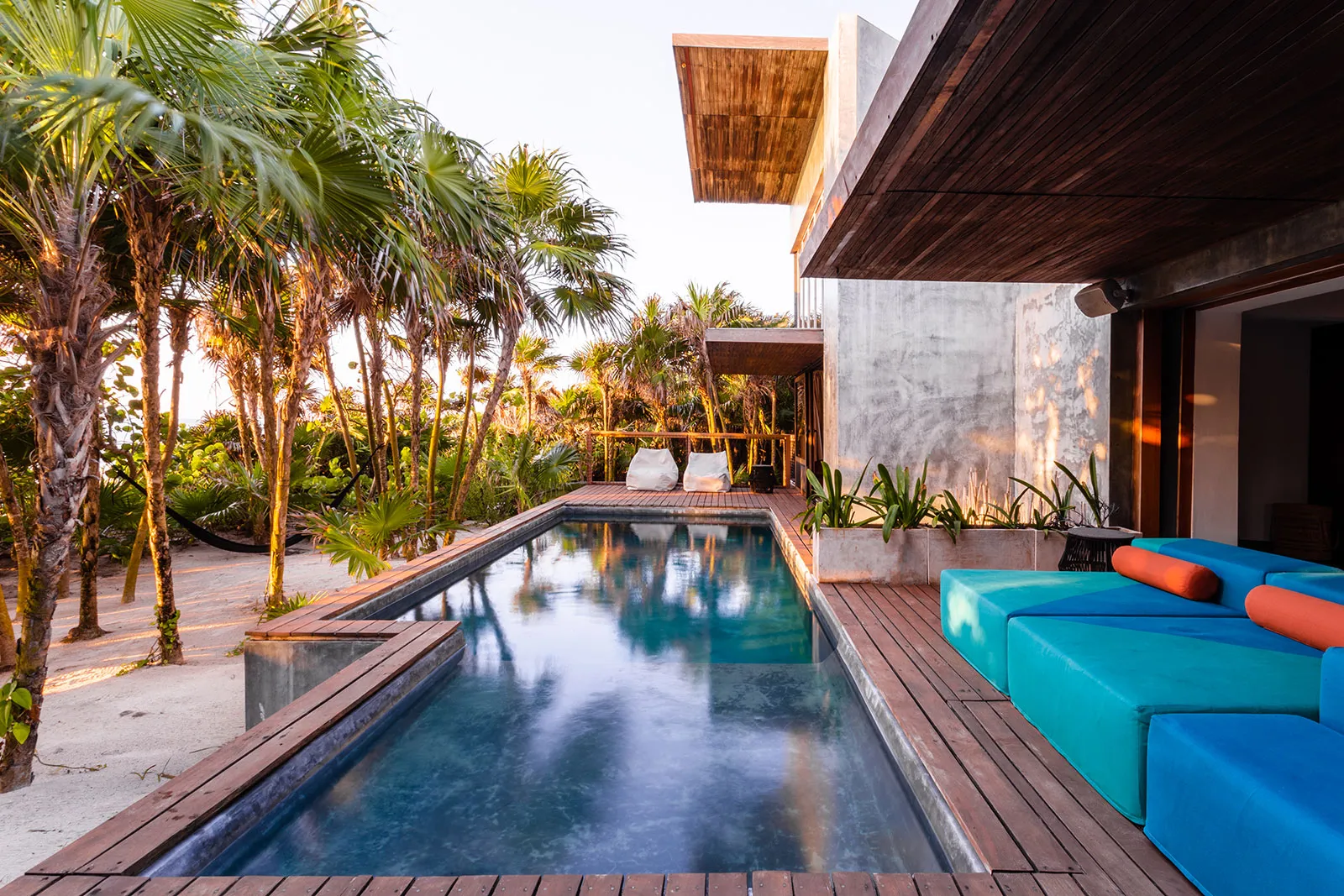
A small number of homes and eco-lodges sit within or on the edge of the reserve. Staying there offers seclusion and nature on your doorstep, but also slower access, limited services and, in some cases, off-grid power and water. Ask about road conditions, how supplies are delivered, meal options and internet before booking.
Practical tips
- Book tours in advance in high season.
- Bring insect repellent, a hat, long sleeves, water and cash.
- Leave drones at home unless authorized.
- Combine the reserve with the beach zone, but not with a tight dinner reservation.
The Sian Ka’an Biosphere Reserve is best visited with a licensed guide and an early start. For more nature near Tulum, read our guide to cenotes near Tulum, and for the wider picture, what Tulum is.