Tulum’s New Design Villas: Staying in Town and the Jungle
What defines the new generation of design villas inland, how they compare with the beach, and what to check before booking.
In this guide
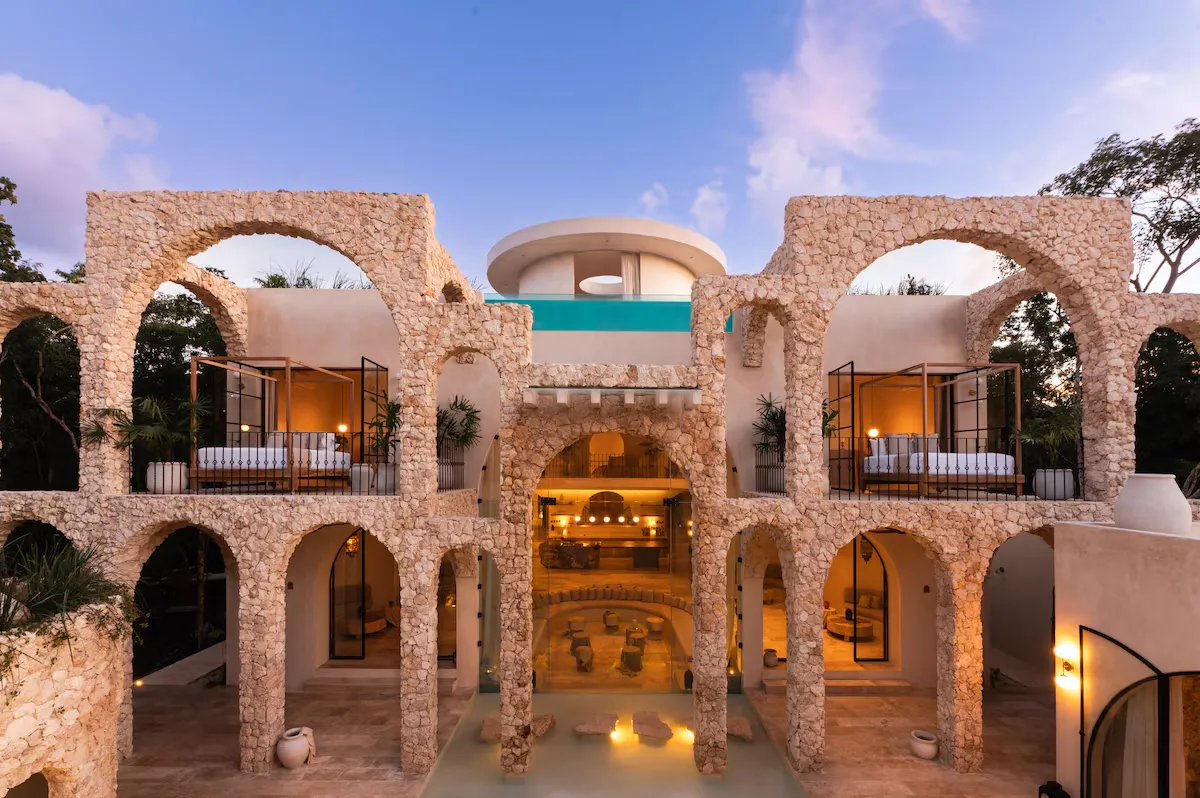
The classic picture of Tulum is a palm-thatched hotel on the beach. Over the past few years, however, a different kind of accommodation has appeared inland: large, contemporary villas in gated communities around the town and in the jungle. Built for groups, many combine several en-suite bedrooms with rooftop terraces, dramatic pools and entertainment spaces that a beach-zone property rarely has room for. This guide explains what defines these homes, how they compare with staying on the beach, and what to check before booking one. Tulum’s new design villas are a category of their own.
Disclosure: the homes featured below are listed by Tulum Holiday Villas, a rental business in which our publisher has an ownership interest. The details come from those listings; confirm them for your dates before booking.
Why Tulum’s new design villas are inland
Beachfront land in Tulum is limited, and much of the coast is protected or already built. Inland, around the town and in the jungle, larger plots allow bigger houses with more bedrooms, private gardens and multiple pools. Many sit inside gated developments with controlled access. The tradeoff is simple: the beach is a drive away rather than outside the door. Our guide to where to stay in Tulum compares the areas.
What defines the design
The newer villas share a recognizable style, shaped by Tulum’s climate and its design-led reputation:
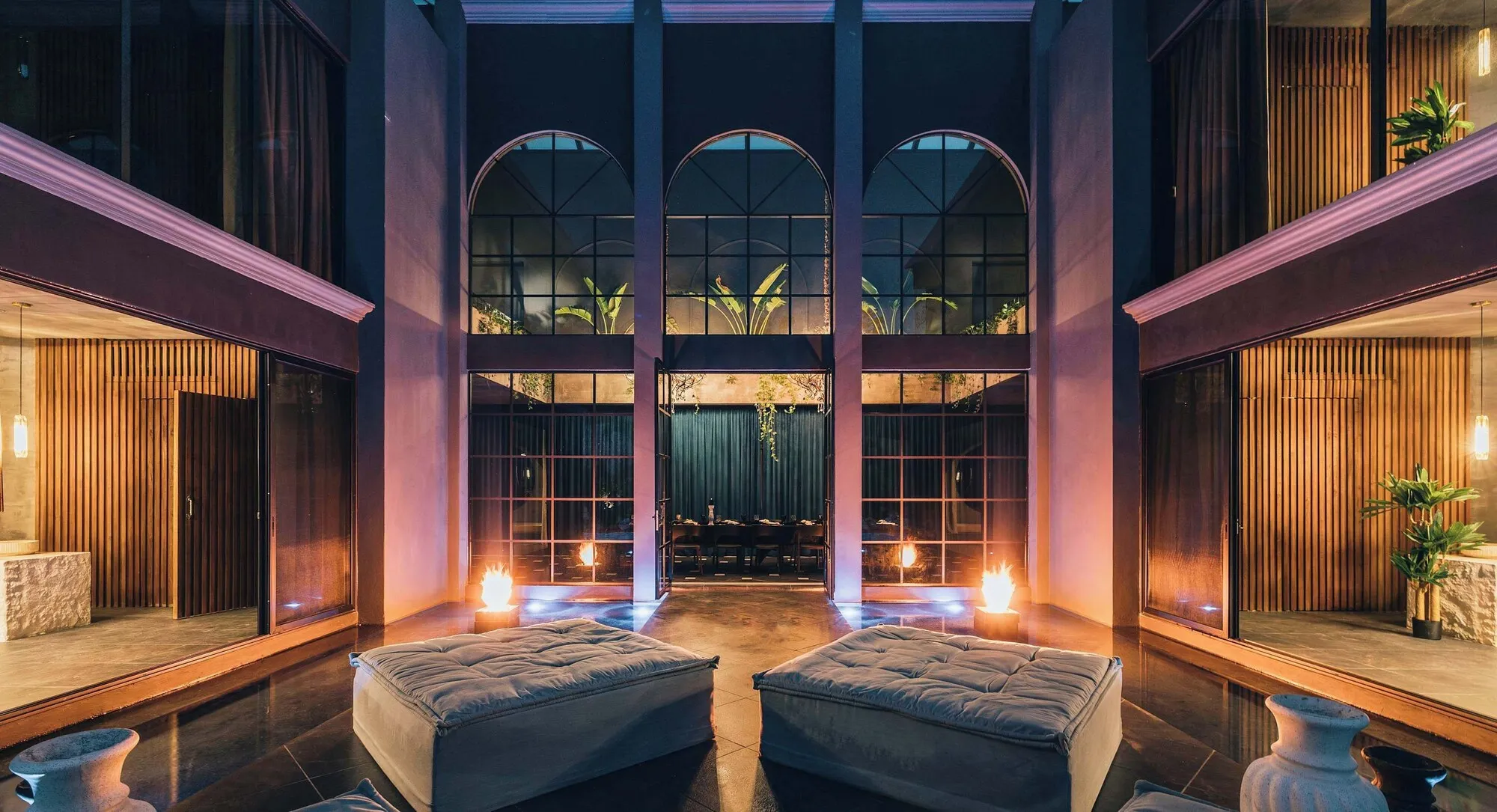
- Natural and textured finishes: polished concrete, stone, wood and lime-based plasters, including chukum, a traditional Maya finish often used around pools and walls.
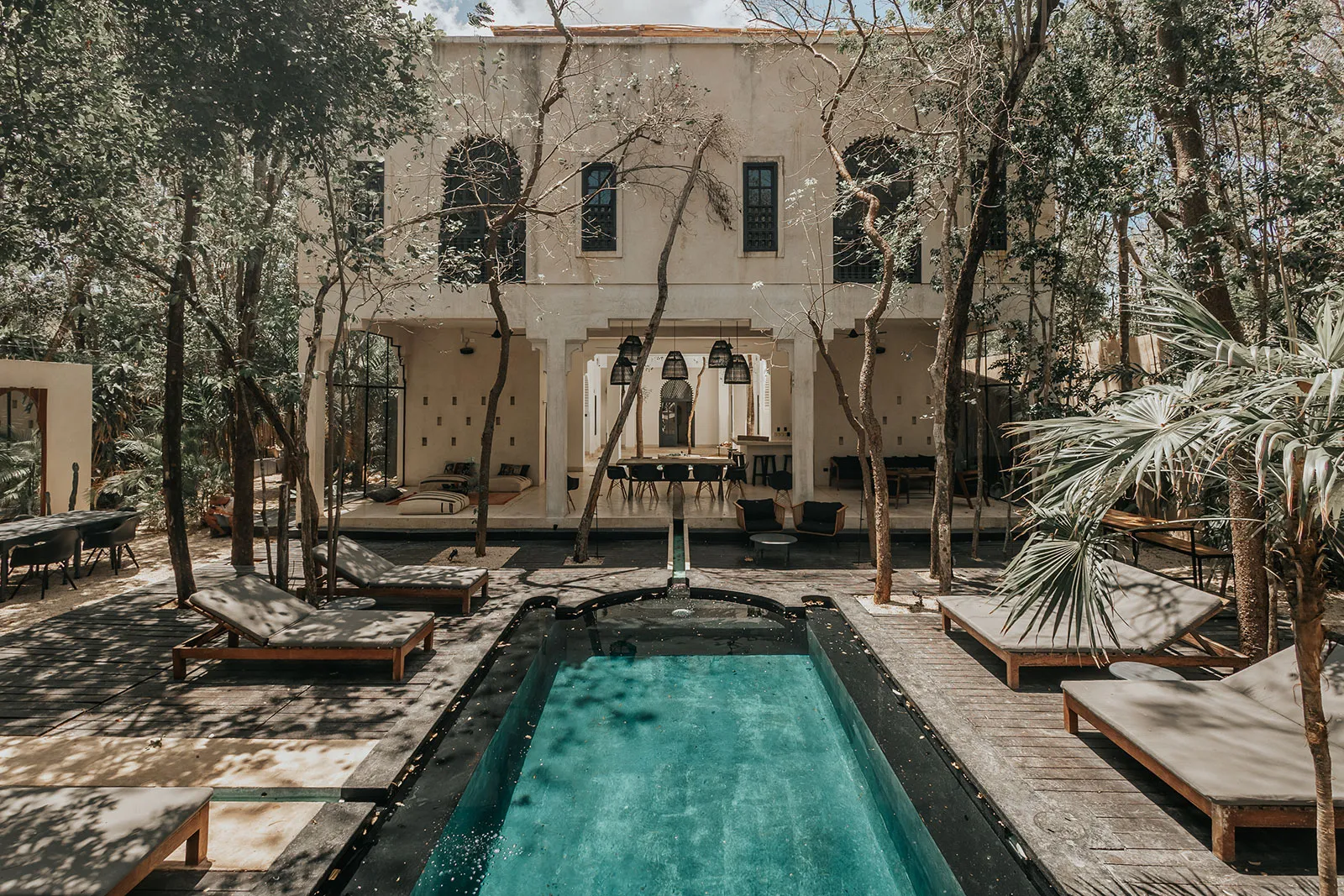
- Indoor-outdoor living: open living areas, shaded terraces and gardens that bring the jungle into the house.
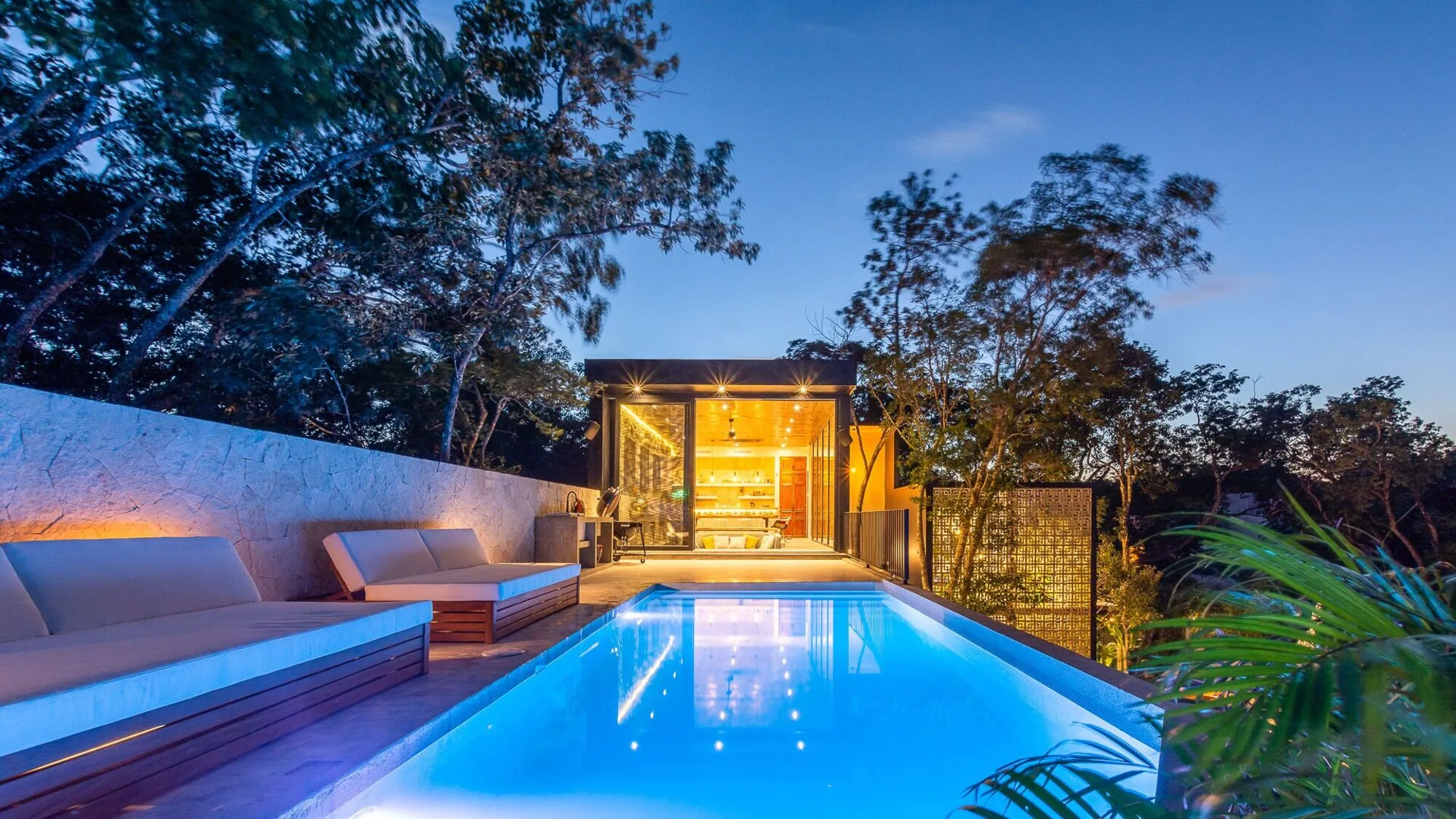
- Rooftops: terraces, lounges and sometimes pools above the tree line, used for sunsets and gatherings.
- Water as a feature: lagoon-style pools, cenote-inspired pools with rock and waterfalls, and plunge pools.
- Entertainment spaces: cinemas, bars and, in some homes, private club rooms designed for celebrations.
Five homes that show the range
El Gastón is a seven-bedroom house for up to 18 guests in a gated community inland from the beach road, listed as staffed. It is built around a cenote-style pool with a waterfall and a stage, and adds a speakeasy bar, a billiard lounge, a cinema and a bedroom with a wall of glass facing an aquarium. It is designed for celebrations and creative gatherings.
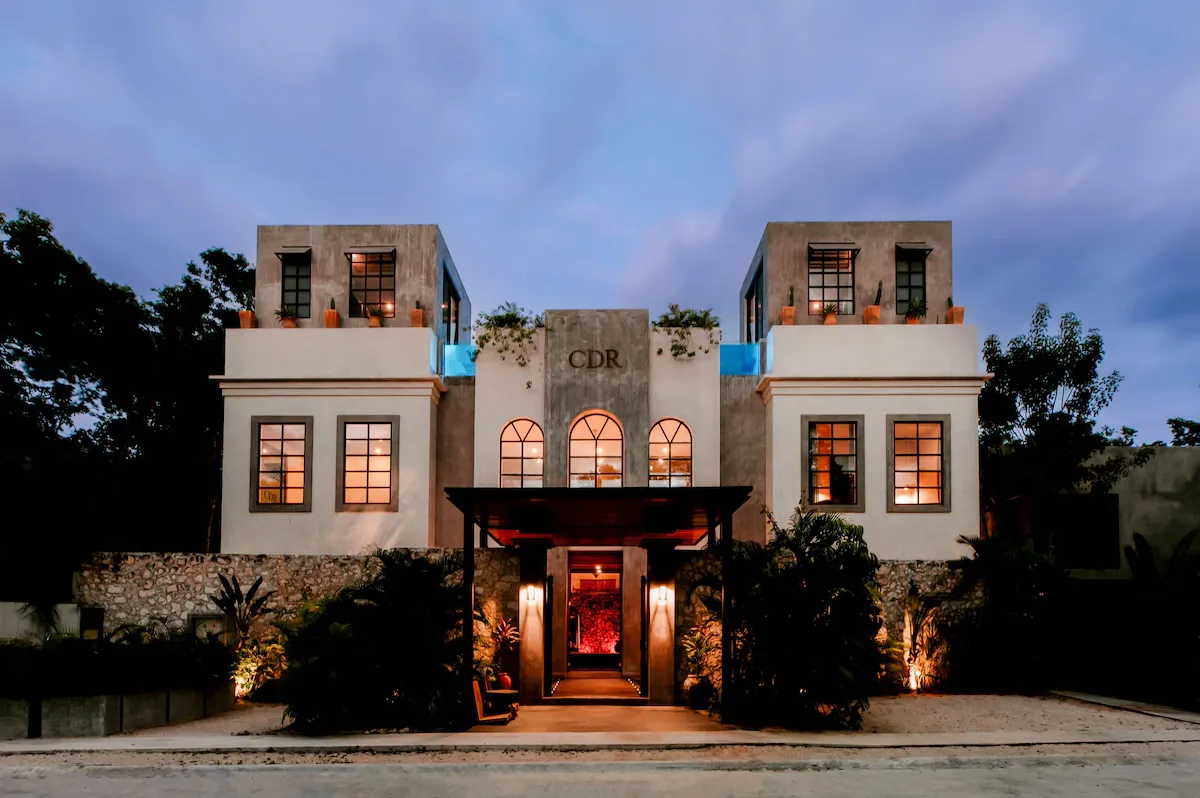
Casa Don Rey is one of the largest homes in this style, with ten en-suite bedrooms for up to 26 guests in a gated community. The listing describes it as fully staffed, with two pools, including one on the roof with a firepit, an indoor nightclub, a theatre with stadium seating and a wine cellar. Parking is limited for a group of that size, so most guests rely on drivers and transfers.
Casa Arka is an eight-bedroom villa for up to 16 guests on a gated jungle plot, with chef, butler and concierge listed as included. Its two pools include a rooftop infinity pool with views over the jungle canopy, and there is a cinema room.
Casa Halo is a six-bedroom concrete house for up to 13 guests in a gated jungle community. Its listing highlights three rooftop areas, a heated pool, an on-site club room and a whole-house sound system.
Casa Akubali is an eight-suite gated estate for up to 20 guests, with a lagoon-style pool, a rooftop pool, a cinema and a gym. A private chef is listed as included.
Town and jungle villas vs beachfront homes
- Space: inland villas often offer more bedrooms, larger gardens and more entertainment areas.
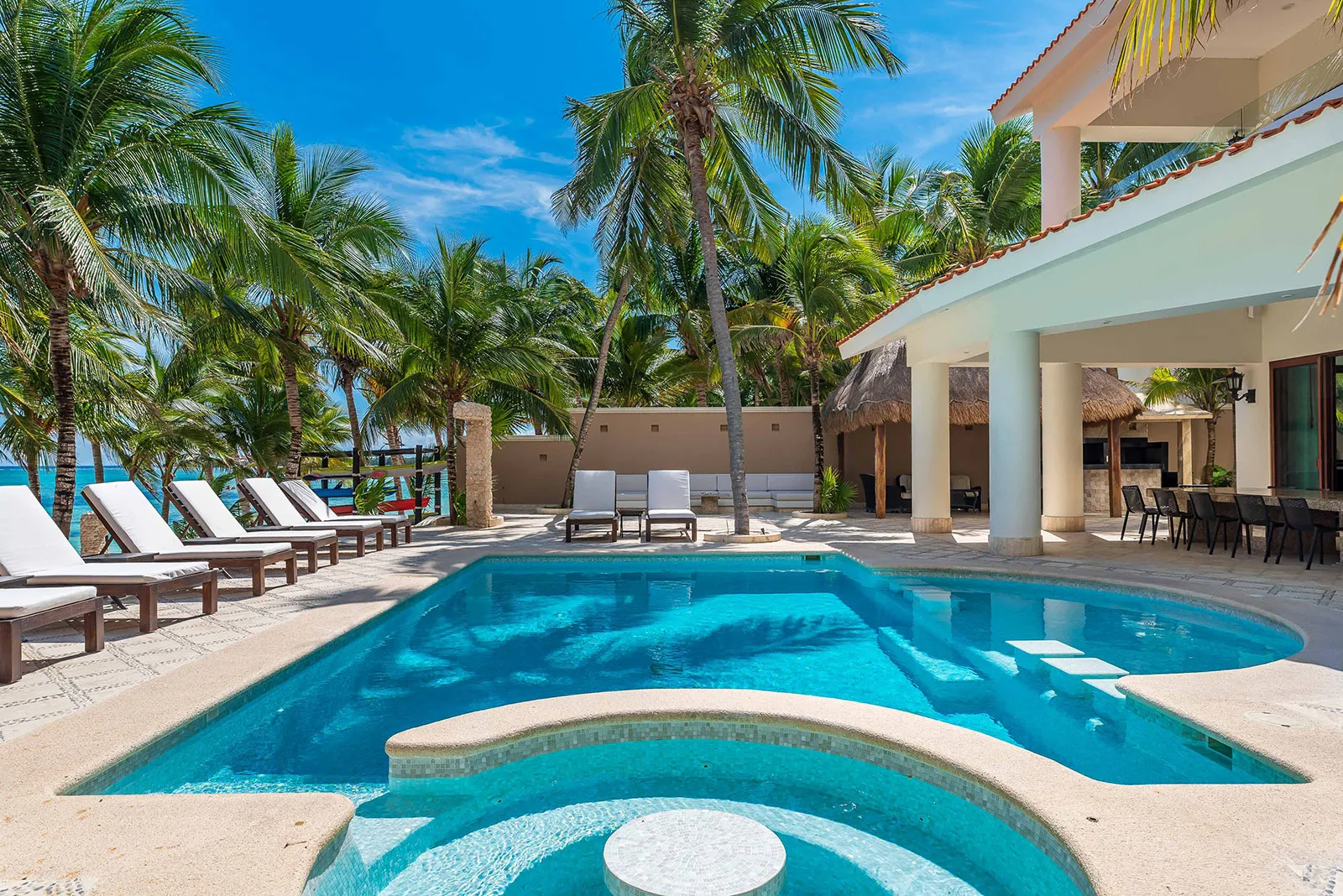
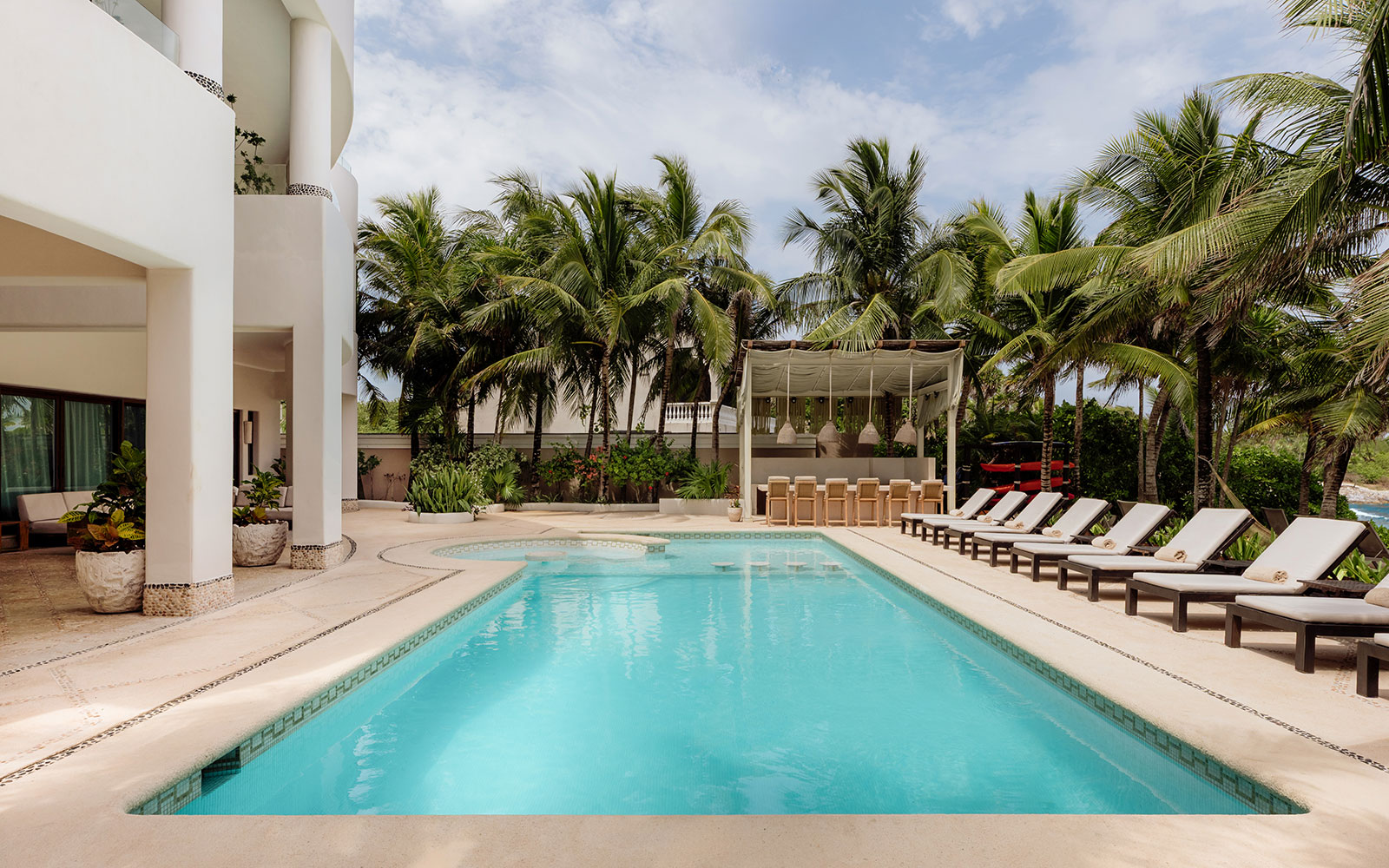
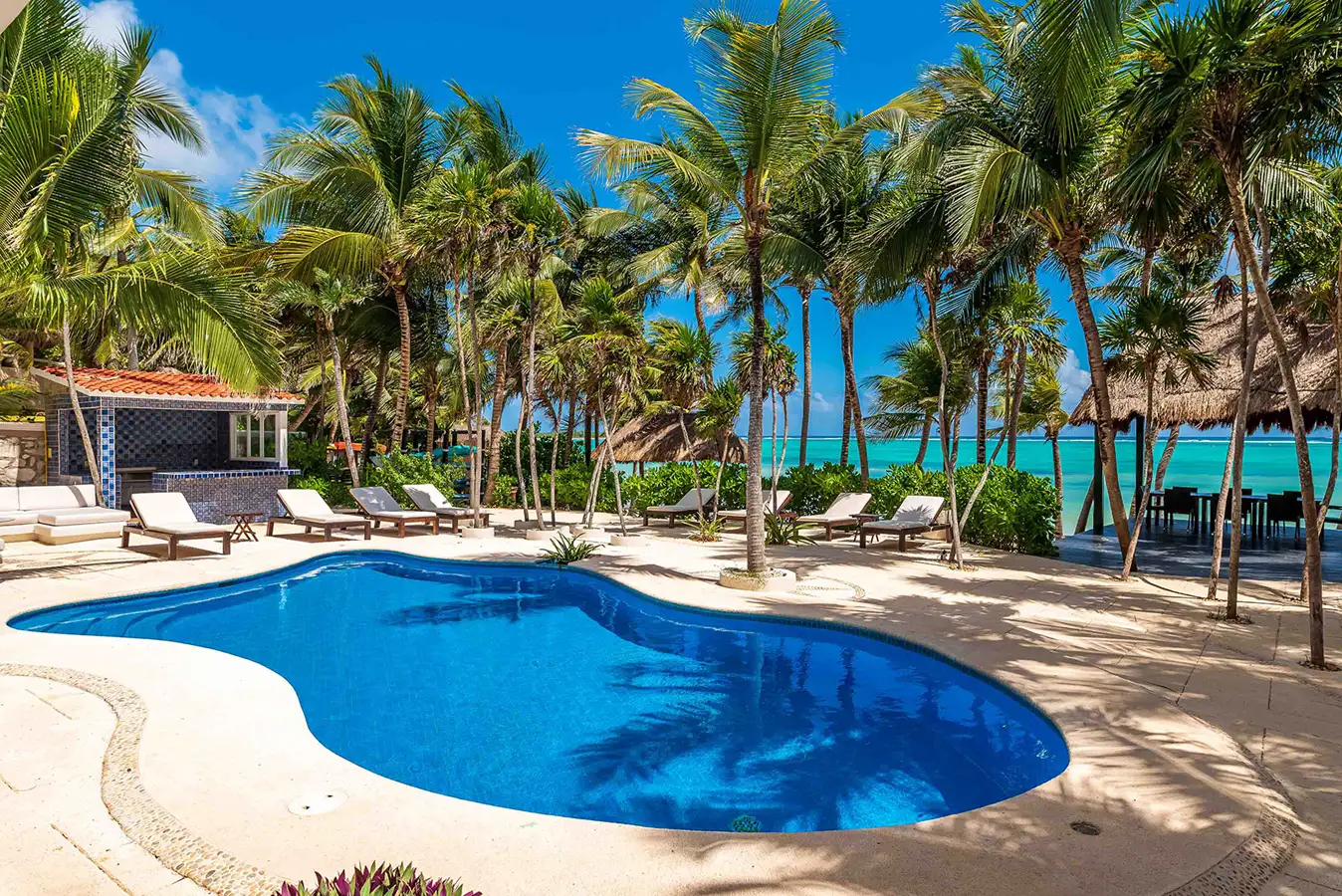
- Beach: beachfront homes win for sand and sea; inland guests drive to the beach or to a beach club.
- Dining and nightlife: town and jungle locations are usually closer to restaurants and bars.
- Water: inland homes rely on pools; beachfront homes add the sea, subject to conditions and sargassum.
For the northern beachfront alternative, read our guides to Soliman Bay and Tankah Bay.
What to check before booking
- Construction nearby: Tulum is still growing quickly. Ask whether there is building work on neighboring plots during your dates.
- Events and noise: houses designed for celebrations may still have community rules on music, guest numbers and hours. Get them in writing before planning a party.
- Staff and inclusions: confirm who is on site and what is included; see our guide to staffed villas and private chefs in Tulum.
- Transport and parking: large groups usually need drivers; ask how many cars the property can take.
- Beach access: ask how long the drive is and whether beach club reservations can be arranged.
- Security and access: confirm how gated access works for guests, drivers and deliveries.
Who these villas suit
Tulum’s new design villas reward guests who value architecture as much as the beach. They suit milestone celebrations, multi-family trips and groups who want to spend a lot of time together at the house, with the town close by for dinners out. Travelers who want to wake up on the sand will usually be happier on the beach or in the northern bays. For timing, read our guide to the best time to visit Tulum.