What Is Cozumel? A Guide to Mexico’s Caribbean Island
One town, one sheltered coast of reefs, one wild coast of surf: how Mexico’s largest Caribbean island fits together.
In this guide
In short
Cozumel is a flat island about 48 by 16 km, 19 km off Playa del Carmen. Nearly everything, including the only town, San Miguel, the villas and the dive sites, is on the calm west coast; the reefs of the southwest are a national park, and the windward east coast is largely wild.
Cozumel is Mexico’s largest Caribbean island, a flat, limestone island about 48 kilometers long and 16 wide, lying 19 kilometers off the mainland opposite Playa del Carmen. Most people know Cozumel as a cruise port or a dive destination, and it is both, but it is also a place to stay: an island with one town, a protected reef system along its western shore, and a wild, almost empty coast on the other side. This guide explains how the island fits together before you choose a villa or a week.
Cozumel at a glance
- Where: in the state of Quintana Roo, off the Riviera Maya coast, about 82 kilometers south of Cancún.
- Size: roughly 48 by 16 kilometers, the largest permanently inhabited island in Mexico.
- People: around 88,600 residents at the 2020 census, almost all of them in San Miguel de Cozumel, the only town.
- Getting there: its own international airport (CZM) with nonstop flights from several US cities, or a passenger ferry of under an hour from Playa del Carmen.
- The draw: the reefs of the Arrecifes de Cozumel National Park, part of the Mesoamerican Barrier Reef.
How the island is laid out
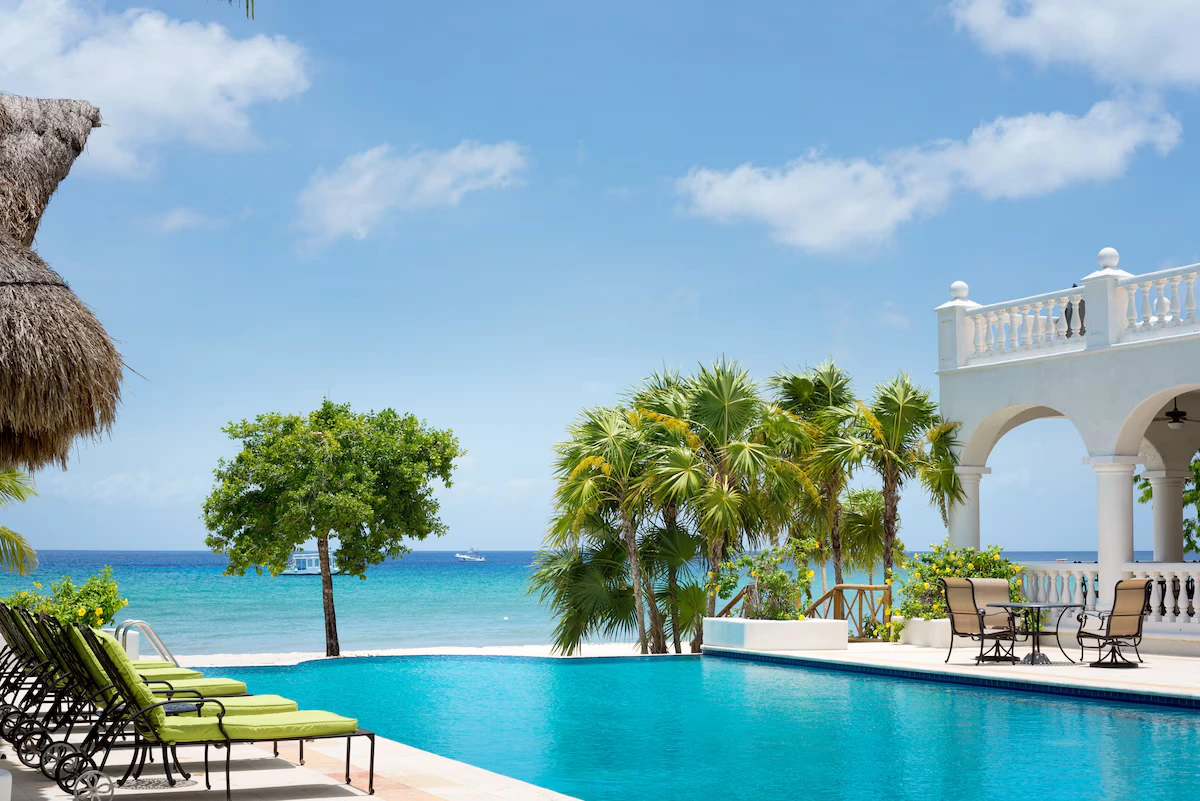
Think of Cozumel as two coasts. The western, leeward side faces the mainland across a channel. It is sheltered from the trade winds, the water is usually calm and clear, and nearly everything is here: the town, the ferry piers, the cruise piers, the hotels, the villas and the dive sites. North of town the shore is mainly condominiums and resorts; south of town it runs past the cruise piers toward the reefs and beach clubs of the southern end.
The eastern, windward side faces the open Caribbean. It is largely undeveloped, with a single coastal road, a few beach bars, and surf that is often too rough for swimming. It is the island most visitors never see, and one of the best reasons to rent a car for a day. The interior is low jungle, with the Maya site of San Gervasio in the middle.
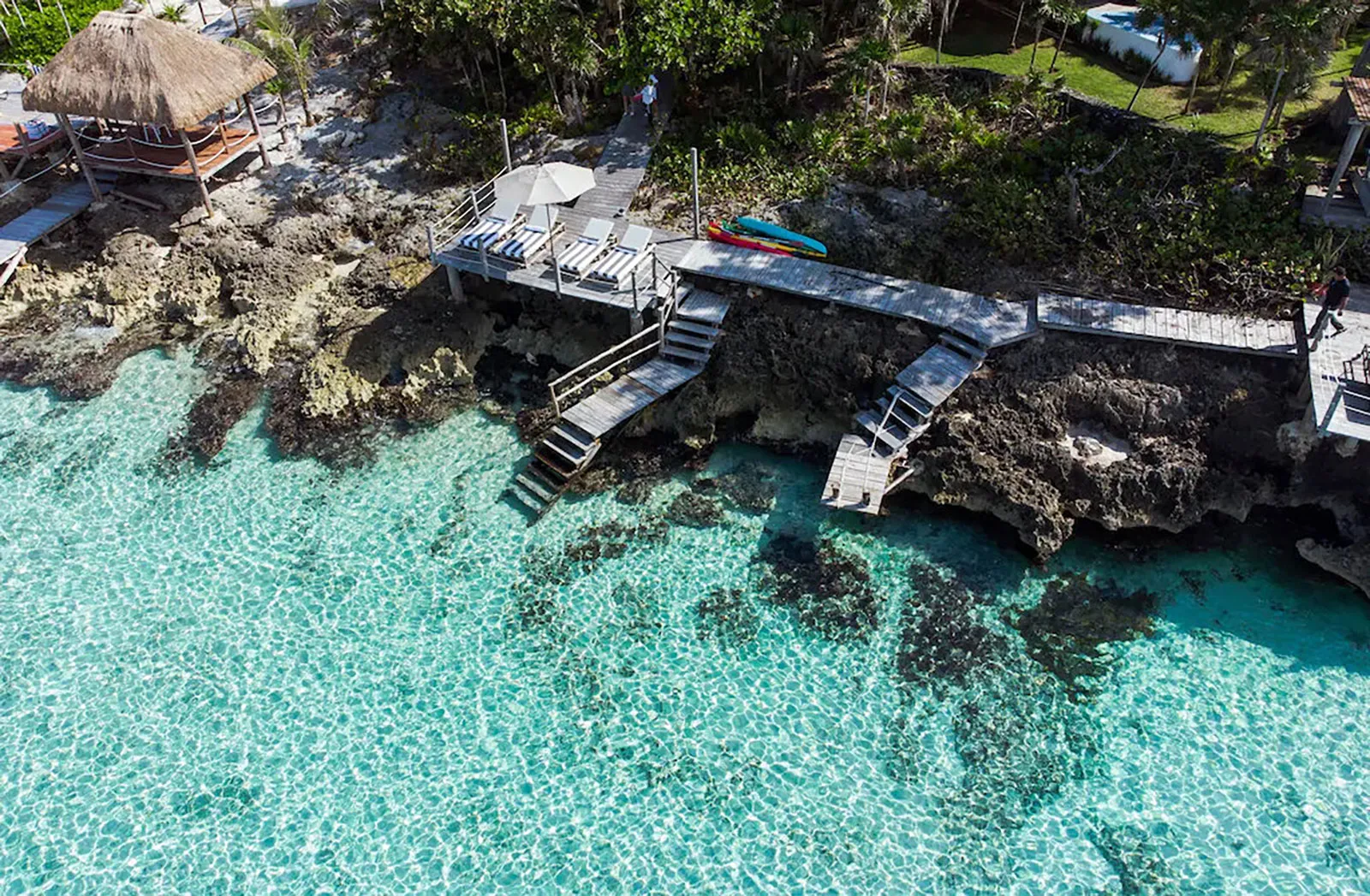
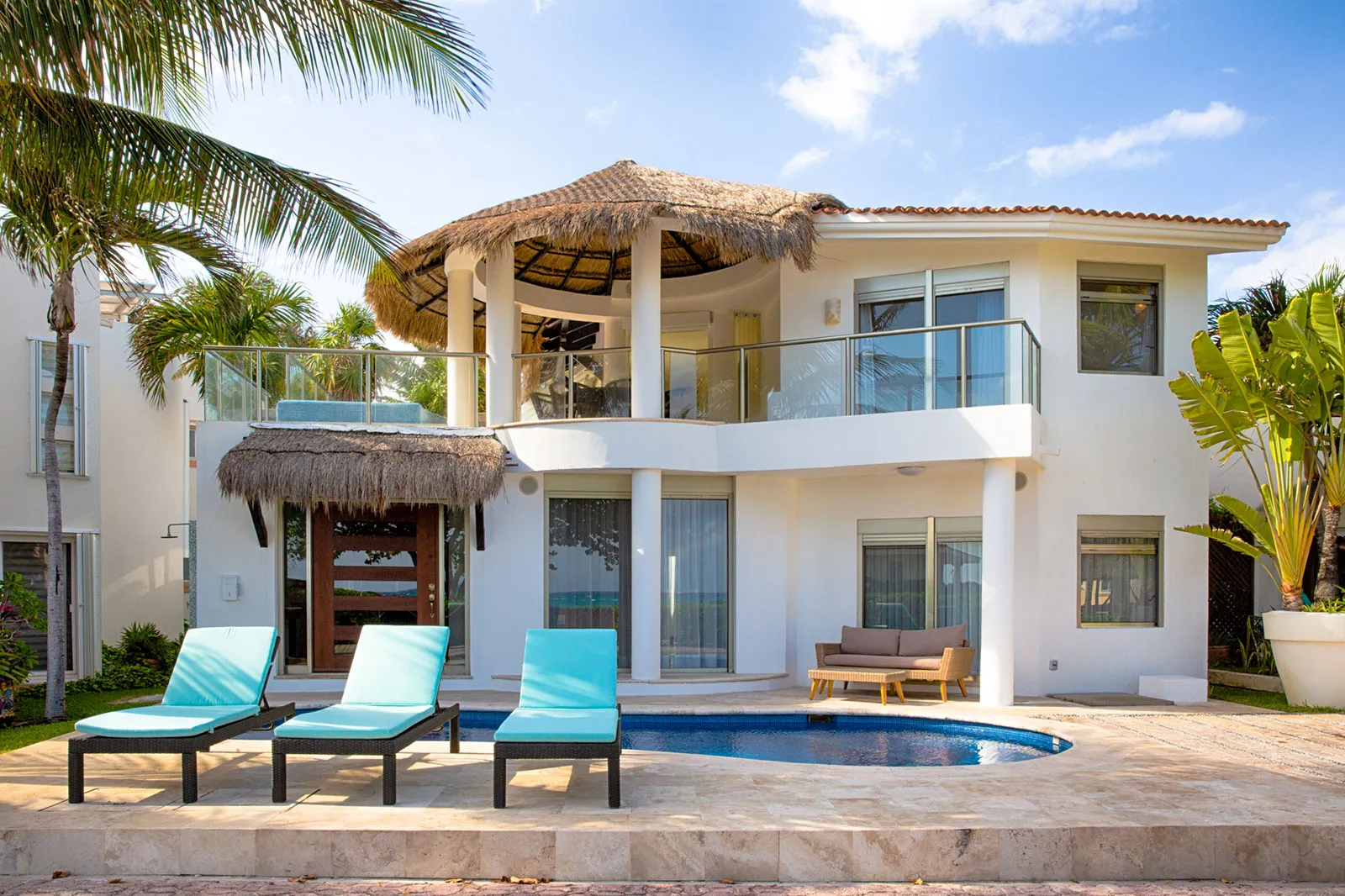
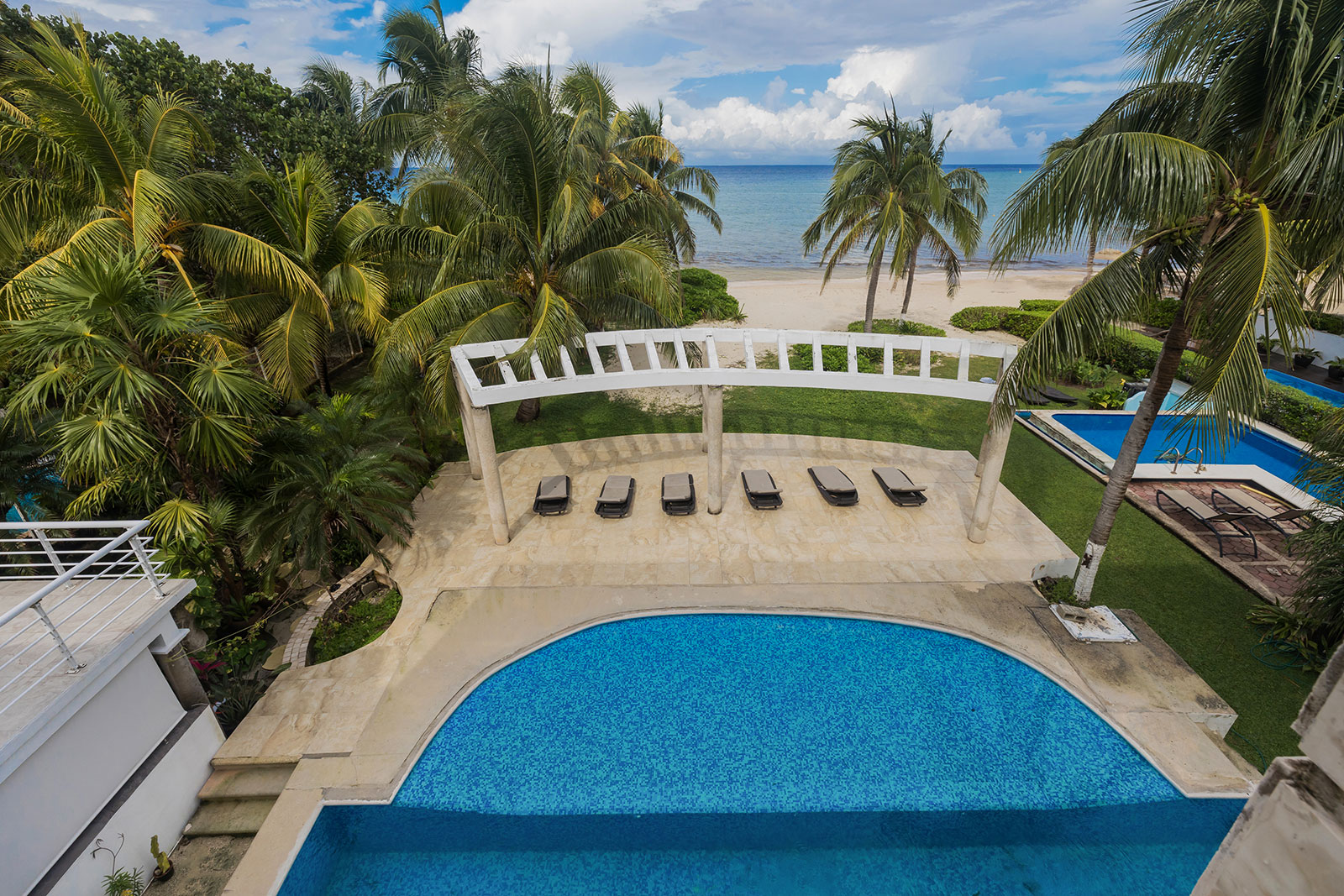
Much of the west coast is ironshore, the sharp, pitted limestone typical of the island, rather than a wide sand beach. Many oceanfront villas therefore have sea ladders or steps straight into deep, clear water rather than a beach in front. Where there is sand, it tends to come in coves. If a beach you can walk along matters to you, confirm it before booking.
The reef that shapes Cozumel
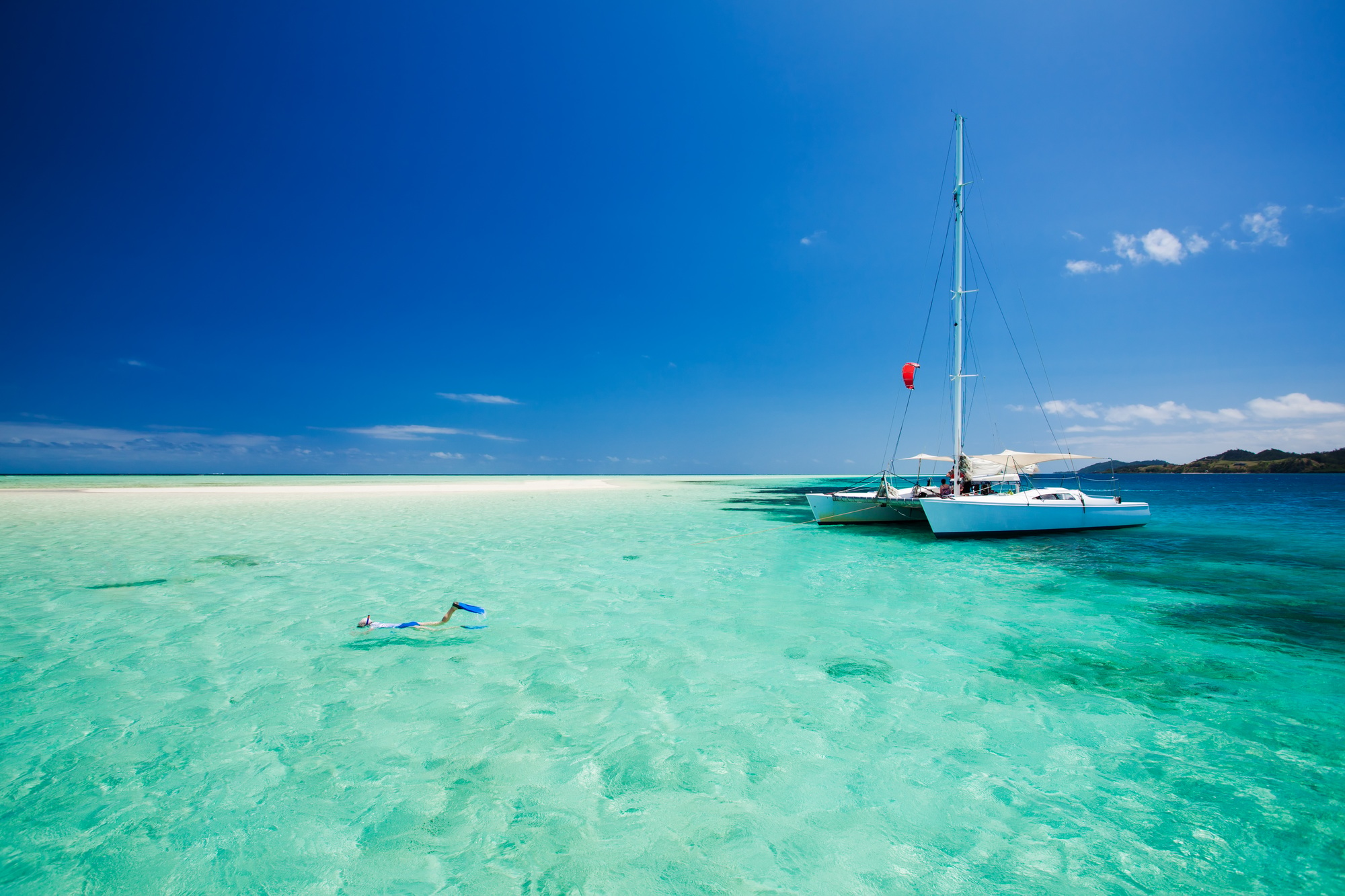
The coral reefs along the southwest of the island were declared a national park in 1996. The Arrecifes de Cozumel National Park covers about 120 square kilometers of reef and sea, with walls that drop far below recreational depths and a current running along the coast that makes Cozumel a classic drift-diving destination. The reefs support more than a thousand species, including sea turtles and the splendid toadfish, which is found almost nowhere else. For dive and snorkel planning, see diving and snorkeling in Cozumel.
The reef has taken hard hits, including two major hurricanes in 2005, and it is managed with rules on anchoring, fees and where boats can go. That protection is a reason to choose operators and excursions that respect it.
History and San Gervasio
Long before cruise ships, Cozumel was a Maya pilgrimage island dedicated to Ixchel, a goddess associated with fertility and childbirth. San Gervasio, the principal Maya site on the island, reached its peak between roughly 1250 and 1550 CE. It is modest next to Chichén Itzá or Tulum, but quiet, shaded and easy to combine with a drive to the east coast. If you want the larger coastal ruins, Tulum is a day trip across the channel.
Cruise days and island days
Cozumel is one of the busiest cruise destinations in the Caribbean. On heavy ship days, downtown, the shops near the piers, and the best-known beach clubs and excursions can be crowded from mid-morning to late afternoon. Staying on the island changes that: early morning dives, a quiet east coast, and a town that belongs to residents again in the evening. A villa guest is having a very different trip from a cruise passenger on the same day.
Is Cozumel right for you?
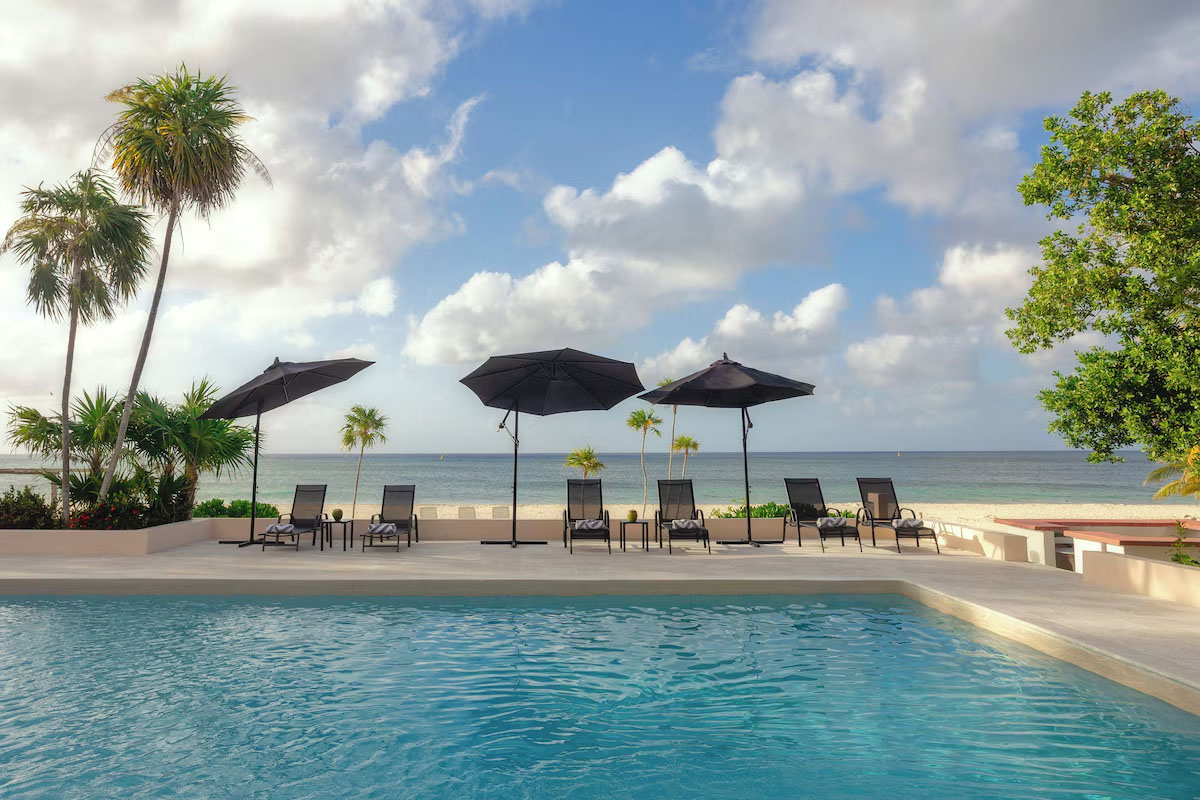
Choose Cozumel if your week revolves around the water: diving, snorkeling straight off the shore, fishing, or simply swimming in clear, calm sea. It suits families and groups who want a private house with a pool and ocean access, and couples who prefer a slower island to a busy resort strip. It is less suited to travelers who want long sandy beaches, many restaurants within walking distance of every villa, or nightlife. For that, look at Playa del Carmen across the channel; many visitors combine the two.
The island shares the Riviera Maya’s weather. Winter and spring are dry and the most popular time to visit, while June to November is hurricane season, with the highest risk late in the season. Sargassum seaweed tends to affect the exposed east coast more than the sheltered west, though no coast is immune; our sargassum guide explains how the seasons work across the region.
Planning next
Read getting to Cozumel to choose between flying direct and taking the ferry, then where to stay in Cozumel to compare the north, town and south. If you have never rented a villa before, start with booking a villa for the first time.