Whale Watching in Los Cabos: Season, Tours, and How to Choose
When whales are present, how tour formats differ, the rules operators must follow, and what to ask before booking.

In this guide
Each winter, whales migrate to the waters off the southern tip of Baja California, and Los Cabos becomes one of the most accessible places in Mexico to see them. You do not need a long drive to a remote lagoon: tours leave from the marinas in Cabo San Lucas and San José del Cabo, and from some viewpoints whales can be seen from shore. The key decisions are timing, the type of boat, and choosing an operator that follows the rules designed to protect the animals. Here is how whale watching in Los Cabos works in practice.
When whale watching in Los Cabos is possible
The Los Cabos Tourism Board identifies December through April as the best period for whale watching. Humpback whales are the species most visitors see around Los Cabos, and gray whales also pass through during their migration. Timing within the season varies from year to year, and no operator can guarantee a sighting on a given day.
If whale watching is a priority, plan your trip for the middle of the season and leave room for a second attempt if the first outing is quiet or the sea is rough. Our guide to the best time to visit Los Cabos explains how the whale season fits with the wider travel calendar.
Los Cabos is not the gray whale lagoons
Many images of people reaching out to touch gray whales come from the lagoons farther north on the Pacific coast of Baja California Sur, which are a long journey from Los Cabos. Around Los Cabos, whale watching is typically offshore observation from a boat. It is a different experience, focused on breaching, tail slaps and mothers with calves, and it fits easily into a half-day.
Choosing a tour format
The tourism board describes options ranging from catamarans to private yachts.
- Small open boats: put you close to the water and can move quickly between sightings. They are also the bumpiest and least sheltered.
- Catamarans and larger boats: more stable, with shade and toilets, which suits families and anyone prone to seasickness.
- Private charters: let you set the pace and combine whales with a stop at Land’s End and El Arco or a swim.
Some operators travel with naturalists or marine biologists, which adds a great deal to the experience for curious children and adults.
The rules operators must follow
Whale watching in Mexico is regulated by a federal standard, NOM-131-SEMARNAT-2010, which sets requirements for permitted operators, how boats approach and position themselves near whales, how long they stay, and how many boats can be near a group at once. Swimming or diving with the whales is not permitted. Waters around Land’s End are also part of a federal protected area with its own rules.
A responsible captain approaches slowly, stays at a distance, and leaves when the time is up, even if the whales are still close. If an operator chases whales or crowds them with other boats, that is a reason to choose a different company next time and to report the behavior.
What to ask before booking
- Does the operator hold the required whale watching permit?
- What type and size of boat is used, and how many passengers will be aboard?
- Is there shade, a toilet, and life jackets in the right sizes?
- Is a naturalist or biologist on board?
- Are the protected-area fee and hotel transfers included?
- What happens if no whales are seen, or if the port is closed?
Watching from shore
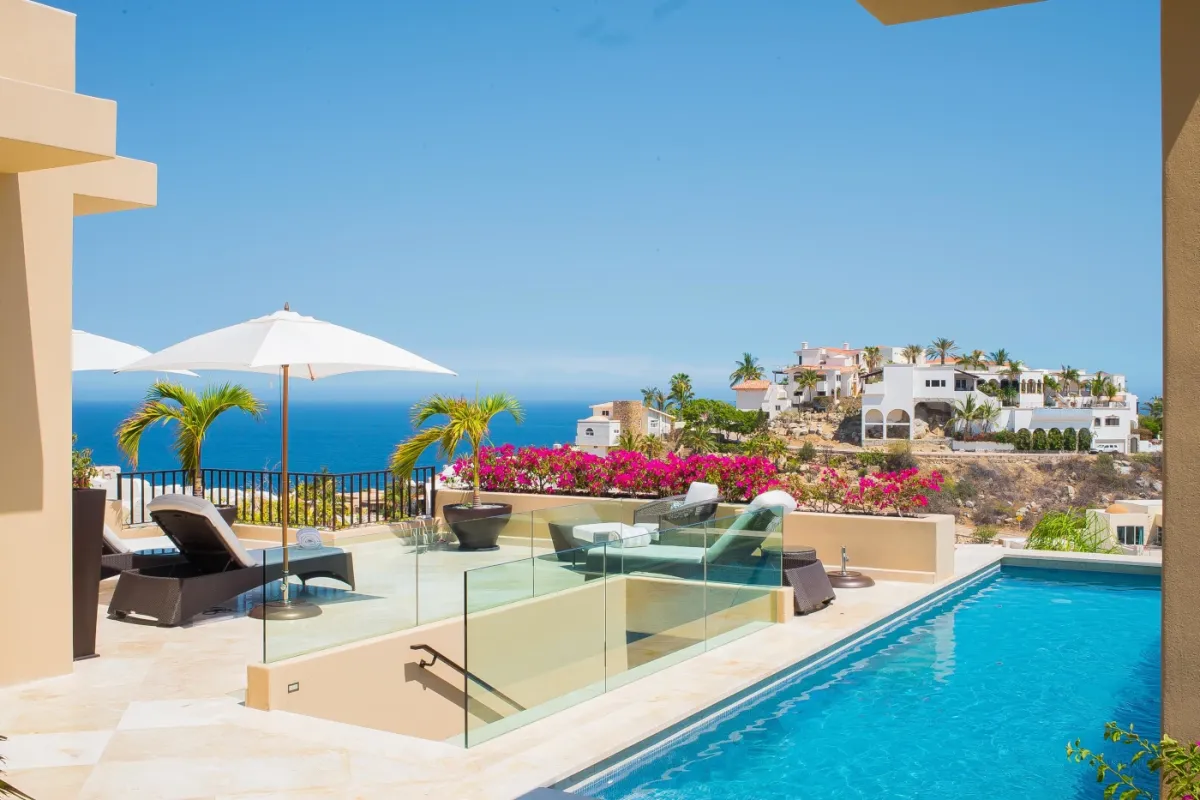
Whale watching in Los Cabos is best booked with a licensed operator during the official season. On clear days during the season, whales can sometimes be seen spouting and breaching from beaches and elevated viewpoints along the coast. It is a bonus rather than a plan, but a home or room with an open ocean view can turn breakfast into a sighting.
Practical tips
- Book morning tours when the sea is often calmer.
- Bring sun protection, a light layer and a hat; wind on the water can feel cool in winter.
- Take seasickness precautions before boarding, not after.
- Use a phone or camera strap; leaning over the rail to shoot is when things get dropped.