Is St Martin Safe? Practical Travel Considerations
Official advice for each side, emergency numbers, hospitals, roads, beaches and hurricane planning
In this guide
Is St Martin safe? By the measure of official travel advice, yes: the US State Department rates Sint Maarten (Dutch side) at Level 1, exercise normal precautions, in its advisory of 24 August 2026, and the UK FCDO describes crime levels on French Saint-Martin as low, while both warn of petty theft, drug-related crime that rarely touches visitors, difficult roads and the June to November hurricane season. The practical point for travellers is that the island is two jurisdictions: emergency numbers, hospitals, police and storm warnings differ by side, so the checks below are organised that way.
Is St Martin safe? What the official advice says
Sint Maarten (Dutch side)
The State Department calls Sint Maarten generally a safe destination and says most crimes against foreigners are crimes of opportunity such as theft of unsecured property and vehicle break-ins, with armed robberies aimed mainly at cash businesses or drug activity. The FCDO adds that main tourist areas are generally safe, advises avoiding isolated areas after dark and using licensed taxis, and notes that Sint Maarten is a drug transit route with strict penalties for possession.
Saint-Martin (French side)
The FCDO’s advice for St Martin and St Barthelemy states that crime levels are low but that sensible precautions apply: avoid isolated beaches at night, do not display cash and use hotel safes. French law applies, and you must be able to prove your identity when asked, either on the spot or within four hours at a police station, so carry a copy of your passport. France’s Ministry for Europe and Foreign Affairs does not publish country advice for its own overseas territories; the Prefecture of Saint-Barthelemy and Saint-Martin is the local state authority.
Emergency numbers by side
- Saint-Martin (French side): 15 for medical emergencies (SAMU), 17 police, 18 fire, and the European 112 from any phone, as listed by the Saint-Martin tourist office.
- Sint Maarten (Dutch side): 911 for police, 912 for ambulance and 919 for fire, as listed by the Government of Sint Maarten. If in doubt, call 911.
- Cross-border calls: the two services are separate, so say which side of the island you are on when you call.
Hospitals and medical care
Each side has one hospital. On the French side, the Centre Hospitalier Louis-Constant Fleming in Marigot is listed by the tourist office. On the Dutch side, the State Department names St. Maarten Medical Center as the only hospital, and notes that care is not free and that many specialties are not available. Travel insurance with medical evacuation cover is recommended by the State Department, and it is the right advice for both sides. Pharmacies are common in Marigot, Simpson Bay and Philipsburg.
Roads and driving
Driving is the main daily risk. The FCDO says main roads are reasonably maintained but become slippery in wet weather, that potholes appear, traffic is dense and signage inadequate. The State Department describes roads as narrow and dimly lit, says right turns on red are prohibited, and confirms a valid US licence is accepted; the FCDO says the same of UK licences on both sides. Speed limits are posted in kilometres per hour on the French side. Do not leave valuables in parked cars at beaches; break-ins at quieter car parks such as those in Terres Basses have been reported by guidebooks. Our guide to getting to St Martin covers transfers and car hire.
Beaches and the sea
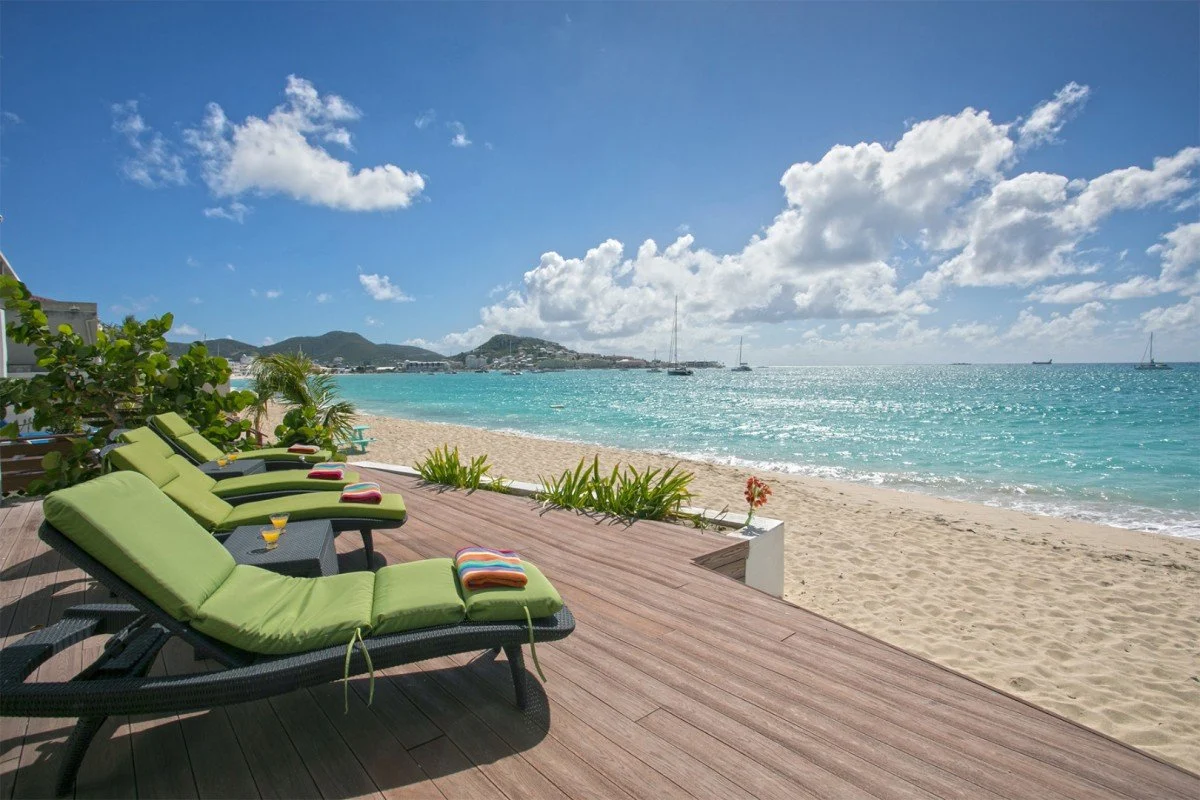
Beach safety varies by coast rather than by side. Caribbean-facing beaches such as Grand Case, Simpson Bay and Great Bay are usually calm; Atlantic-facing beaches such as Orient Bay, Guana Bay and Dawn Beach take wind and swell, and Cupecoy, Baie Rouge and Baie Longue are noted for drop-offs or undertow. There are few lifeguards. At Maho Beach on the Dutch side, jet blast from departing aircraft is a serious hazard at the fence. The Saint-Martin tourist office also warns about manchineel trees, whose sap burns skin, and about ciguatera in some reef fish and the presence of dengue, so use repellent.
Hurricane season planning
The Atlantic season runs 1 June to 30 November with a peak around 10 September. Hurricane Irma in September 2017 caused catastrophic damage to both sides, and the Dutch-side airport was only fully rebuilt in 2024. If you travel in season, book refundable rates, buy insurance that covers storm disruption, and know the warning sources: Meteo-France and the Prefecture on the French side, which uses colour-coded vigilance levels and the FR-Alert system, and the Meteorological Department of St. Maarten on the Dutch side. The FCDO also points to the US National Hurricane Center. Our seasonal guide, best time to visit St Martin, explains the calendar in detail.
Sensible precautions
- Valuables: leave passports in the safe and carry a copy; take little to the beach.
- Night: stick to lit, busy areas in Simpson Bay, Grand Case and Marigot; avoid empty beaches after dark.
- Taxis: use licensed taxis with fixed fares; airport taxis are cash only.
- Drugs and alcohol: penalties for drug possession are severe on both sides; drink-driving is enforced.
- Nature reserve: fishing, drones and collecting are prohibited inside the French reserve, with fines.
- Documents: complete the Sint Maarten entry form before arrival; carry ID on the French side.
So, is St Martin safe? For most visitors it is, with the usual Caribbean cautions about theft, driving and storms. The difference from a single-country island is administrative: learn which side you are on, save both sets of emergency numbers, and follow the authority responsible for that side.