What Is Zermatt? The Car-Free Village Beneath the Matterhorn
A car-free village, three lift bases and some of the highest skiing in the Alps, explained before you plan.
In this guide
Zermatt is one of the most recognizable mountain villages in the world, thanks to the Matterhorn rising above it. It is also unusual in practical ways: there are no ordinary cars, the skiing reaches almost 4,000 meters, and the lift network crosses into Italy. Knowing how the village works makes planning simple. So what is Zermatt, exactly? This guide explains each part.
What is Zermatt, and where is it?
Zermatt is in the canton of Valais, in the German-speaking part of southern Switzerland, at about 1,608 meters. It sits at the head of a valley surrounded by some of the country’s highest peaks, including the Matterhorn at 4,478 meters. The first ascent of the Matterhorn, in 1865, helped turn the village from a farming community into a mountaineering and ski destination.
A car-free village
Zermatt is car-free. Private vehicles may drive only as far as Täsch, a few kilometers down the valley, where the Matterhorn Terminal offers large covered parking and shuttle trains into the village. Most visitors take the train all the way. Inside the village, people get around on foot, by electric taxi, by the free e-bus or, for some, by horse-drawn carriage. Our guide to getting to Zermatt explains the options.
How the transport pieces fit together
The chain is Täsch, shuttle train, then foot or electric vehicle. The Matterhorn Terminal in Täsch has 2,100 covered spaces and runs 24 hours a day all year; Matterhorn Gotthard Bahn’s shuttle leaves every 20 minutes from 5:55 to 21:55, then hourly to about 00:30 or 01:00 and all night at weekends. A return ticket cost CHF 17.20 in September 2026 and the Swiss Travel Pass or GA covers it. Licensed electric taxis based in Täsch also drive into the village, which suits late arrivals and families with luggage. Inside Zermatt, two free e-bus lines link the station, the Sunnegga side and the Matterhorn Glacier Paradise valley station; the details are in our guide to getting to Zermatt.
The lift bases
Three main lift systems leave from the village:
- Sunnegga: an underground funicular to the Sunnegga-Rothorn area.
- Gornergrat: a cog railway climbing toward the Gornergrat.
- Matterhorn Glacier Paradise: cable cars to the highest lift-served point in the Alps.
Because Zermatt is a village-and-lift resort rather than a slope-side one, the walk to your preferred lift base matters when choosing accommodation. Read our guide to where to stay in Zermatt.
The skiing
The Matterhorn Ski Paradise describes 360 kilometers of pistes and 52 lifts, spanning Switzerland and Italy, with links to Breuil-Cervinia and Valtournenche. The Matterhorn Glacier Paradise station reaches 3,883 meters and allows skiing on the glacier beyond the usual winter season. Read our guide to skiing in Zermatt.
The village
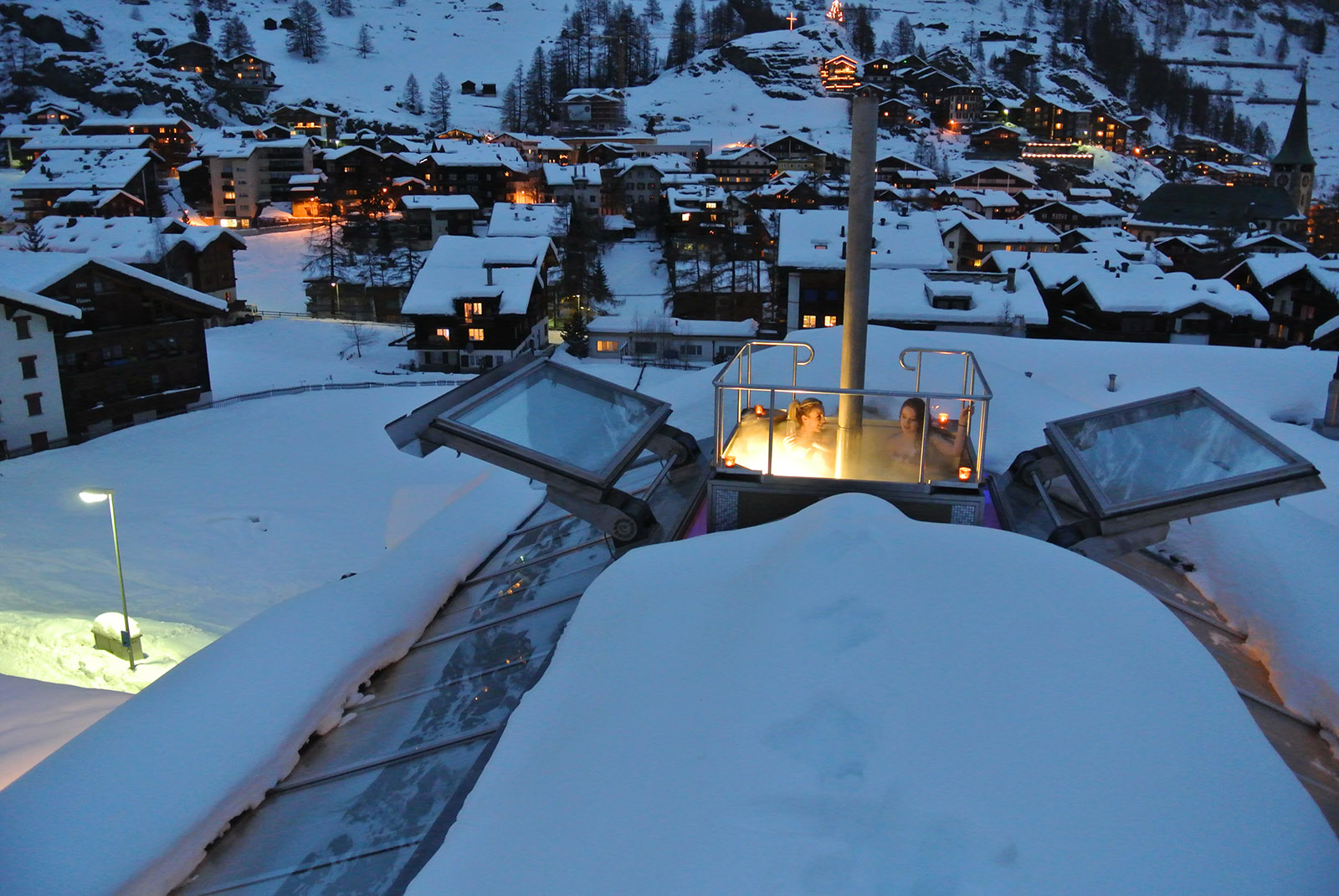
Zermatt combines traditional wooden chalets with hotels, boutiques and a wide range of restaurants, several of them recognized for fine dining. Its atmosphere is international but less formal than some Swiss resorts.
Beyond skiing: the Gornergrat and high viewpoints
The Gornergrat railway climbs from the village to a viewpoint above 3,000 metres, with views of the Matterhorn and the surrounding glaciers. The Matterhorn Glacier Paradise gives non-skiers a second high-altitude viewpoint. Both make Zermatt worthwhile for guests who never put on skis.
What a sightseeing day involves
The Gornergrat Bahn’s valley station is directly opposite the main railway station, and the cogwheel ride to 3,089 metres takes 33 minutes; in 2026 it runs every 24 minutes from 08:00 between 20 April and 1 November, and is suspended for construction from 2 to 14 November 2026. The Matterhorn Glacier Paradise takes around 40 minutes including changes; a return ticket started from CHF 120 in the 2026 summer tariff, CHF 132 in July and August, and a combined Peak2Peak ticket for both viewpoints is CHF 165 for December 2026 to April 2027. The Sunnegga funicular takes 4.5 minutes to 2,288 metres. Prices are tiered by date, so check the tariff before choosing a day; see when to visit Zermatt.
Who Zermatt suits
- Keen skiers who want high-altitude snow and a large ski area that links to Cervinia in Italy.
- Mixed groups, since non-skiers have scenic trains, viewpoints, spas and restaurants.
- Travellers who enjoy walking and a car-free village atmosphere.
- It suits less well those who expect ski-in, ski-out access everywhere; many hotels and chalets rely on electric taxis, buses or a walk to the lifts.
When to go
Winter brings skiing, and summer brings hiking, climbing and high-altitude glacier skiing. Our guide to when to visit Zermatt explains the seasons.
What is Zermatt, in one line? A car-free village beneath the Matterhorn, and knowing its layout makes every other choice simpler. For a comparison with other Alpine resorts, read Verbier vs Zermatt vs Courchevel.