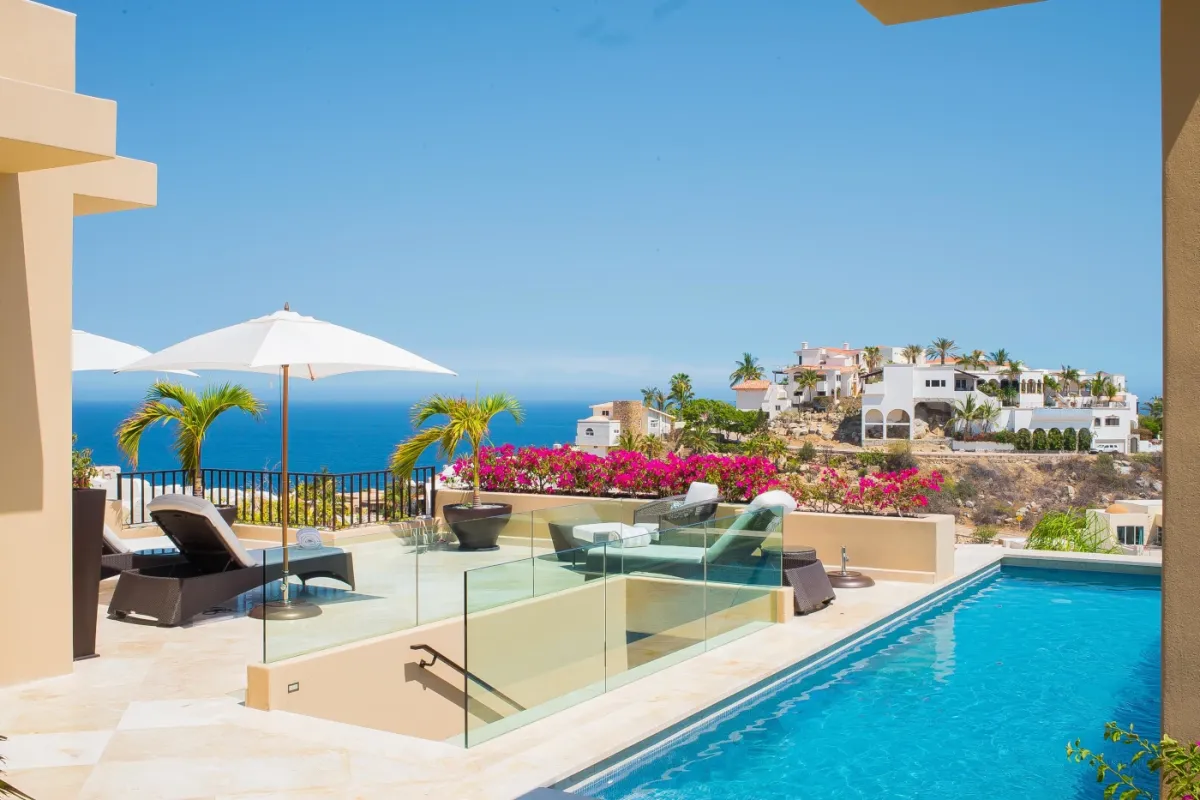
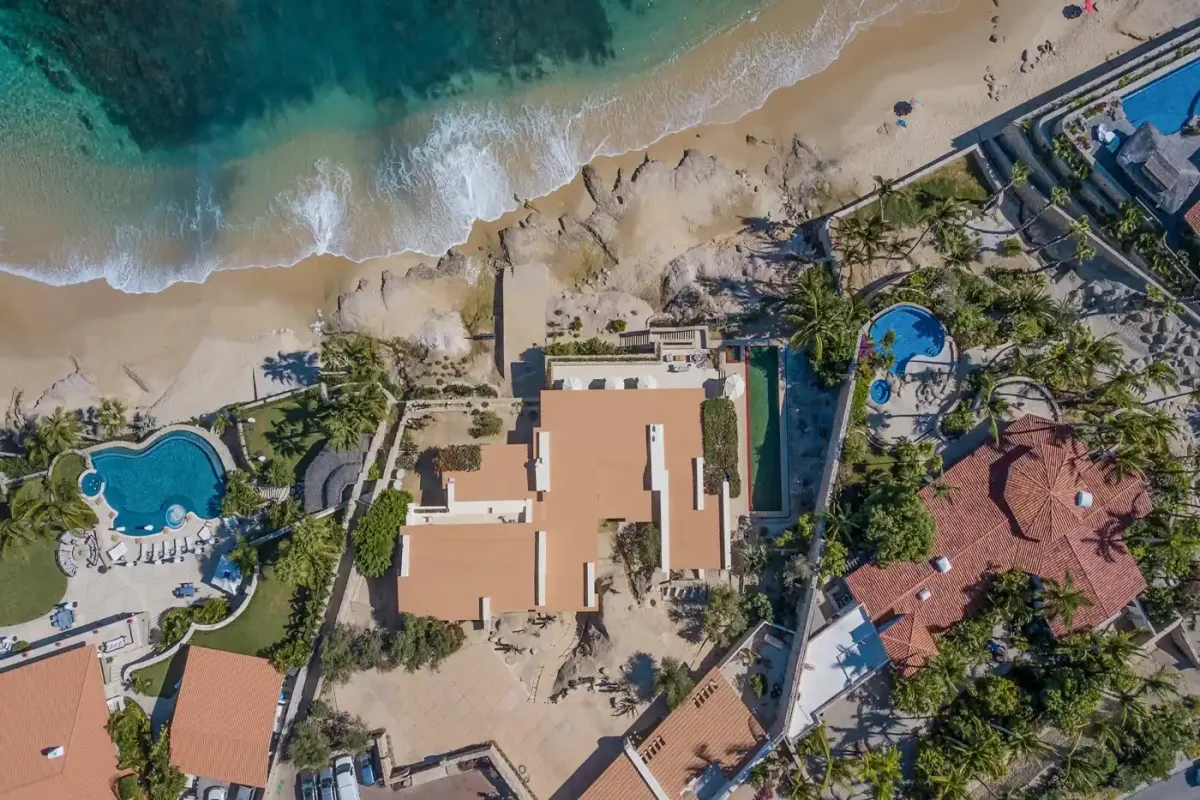
Where to Stay in Los Cabos: Cabo San Lucas, Corridor or San José?
Choose a base by atmosphere, walking, beach access, airport transfer, and how much local transport you want to arrange.

In this guide
Choosing where to stay in Los Cabos is less about finding the “best” area than deciding how you want each day to work. Cabo San Lucas, the Tourist Corridor, and San José del Cabo are connected, but they are not interchangeable. One concentrates the marina, nightlife and a busy swimming beach; one spreads resorts and beaches along the coast between the cities; and one combines a historic center with a separate coastal hotel area. If the place names are new to you, start with what Los Cabos is.
Your exact address matters as much as the area name. A room near a town center may put dinner and some activities within walking distance. A beachfront property may still face water that is unsuitable for swimming. A resort described as being “in Los Cabos” may sit well away from either city. Begin with the three-way base decision, then check the property against the beach and transport questions that matter to you.
The three bases at a glance
| Base | Best fit | Main compromise |
|---|---|---|
| Cabo San Lucas | Travelers who want the marina, boat departures, restaurants, nightlife and Médano Beach close together | The central visitor area is energetic; quieter properties may sit beyond the useful walking zone |
| Tourist Corridor | Travelers who want a resort-centered stay, coastal views, golf or access to several separate beaches | It is a long coastal road, not a town; most outings require arranged transport or a car |
| San José del Cabo | Travelers who prefer galleries, plazas, restaurants and a slower town atmosphere | Historic centro and the coastal hotel area are distinct, so one address rarely provides immediate access to both |
Cabo San Lucas: activity within a compact visitor center
Cabo San Lucas is a practical choice when you want to organize the trip around activity. Downtown, the marina and parts of Médano Beach form a relatively compact visitor center. Stay in the right part of that cluster and you may be able to walk to restaurants, boat departures, shops and the sand rather than arranging a ride for each outing.
The central visitor area has a lively atmosphere. The marina supports fishing and sightseeing departures, while downtown and the Médano waterfront concentrate dining and nightlife. That suits travelers who want choices after dark, groups whose members may want to do different things, and short stays where minimizing local logistics matters more than retreat-like isolation. For the boat side, see sportfishing in Los Cabos and whale watching in Los Cabos.
Do not treat all Cabo San Lucas addresses as equally walkable. Hills, major roads and properties farther from the marina can change the calculation quickly. If walking is important, ask for the route—not merely the straight-line distance—from the property to the marina, Médano and the part of downtown you expect to use.
The Tourist Corridor: a coastal base between the cities
The Tourist Corridor is the developed coastal stretch joining Cabo San Lucas and San José del Cabo. Official tourism material describes it as roughly 33 kilometers, or 20 miles, long. It is a functional travel zone built around the Transpeninsular Highway, resorts, golf courses and separate beaches—not a third town with one center.
A Corridor stay fits travelers who expect the property itself to be the base: breakfast, pool time, beach time and perhaps golf without leaving every day. It can also work well when the trip includes both cities, because you begin between them rather than at one end. The tradeoff is dependence on transport. You may be able to walk comfortably within a resort, but should not assume that neighboring beaches, restaurants or properties are connected by a pleasant pedestrian route. The courses are compared in our guide to golf in Los Cabos.
“Corridor” alone is not a precise enough location for planning. Ask for the property’s kilometer marker or map position, the entrance used from the highway, and the usual transport arrangement to each city. A stay close to San José has a different airport and dining pattern from one near Cabo San Lucas, even though both may use the same Corridor label.
San José del Cabo: choose between centro and the coast
San José del Cabo is a good fit when historic streets, galleries, plazas and restaurants matter more than late-night entertainment. Its historic centro offers a compact walking area for an art-and-dining visit: the gallery district, mission, public spaces and restaurants are gathered within the old center. See the San José del Cabo Art Walk, and for restaurants by area, where to eat in Los Cabos.
But “staying in San José” can mean two different things. A centro address prioritizes streets and town life. A coastal or hotel-zone address prioritizes the beach and property facilities. Do not assume you can step from one into the other. Before booking, decide whether your default evening is a walk around the center or time at a coastal property, then verify how you would travel to the other.
San José is closer to the main airport than Cabo San Lucas. SJD lies north of the city, while Cabo San Lucas is farther along the coast. That does not make every San José transfer short, but it generally reduces how much of the Corridor must be covered after landing. It is a practical advantage for a brief stay or an early departure.
What the beach means for your base
A beachfront address does not guarantee swimmable water in Los Cabos. Rough surf, rip currents, undertows and abrupt changes in depth make some stretches unsuitable. Conditions and posted flags must override a general description of any beach.
Cabo San Lucas has a convenient city-and-beach combination around Médano, which sits near downtown and the marina. Along the Corridor, protected coves such as Chileno and Santa María are commonly used for swimming and snorkeling, and Palmilla is another recognized swimming beach nearer the San José side. These are separate public beaches, however; staying somewhere in the Corridor does not mean one will be walkable from your room. Our guide to swimmable beaches in Los Cabos covers each one and the flag system.
If swimming is central to the trip, ask for the exact beach in front of the property, whether guests commonly enter the water there, and where the nearest practical alternative is. Recheck flags and local instructions on the day.
Airport and transport consequences
The main commercial arrival point is Los Cabos International Airport, SJD, north of San José del Cabo. Cabo San Lucas is farther along the coast. Check the route to your exact property rather than using a city-wide distance to estimate the transfer: traffic, the property entrance and the Corridor location all matter. Transfer options are compared in getting to and around Los Cabos.
You may not need a rental car if you stay near central Cabo or centro in San José and arrange airport and occasional beach transfers. A Corridor stay creates more frequent transport decisions, especially if you intend to eat away from the property or visit both cities. A car becomes more useful for repeated independent outings, but it also adds parking, navigation and insurance questions. Compare that with the total cost and flexibility of prearranged transfers or taxis rather than assuming one solution fits every base.
When an outlying stay makes sense
La Ribera and Cabo Pulmo lie outside the central Cabo–Corridor–San José pattern and may suit a trip specifically organized around the East Cape’s quieter setting and marine activities. “East Cape” is a travel-planning term rather than a boundary precise enough to predict roads, services or transfer time. Choose a named place, confirm current access directly with the host, and expect greater transport dependence. See our guide to Cabo Pulmo National Park before planning a stay that far out.
Todos Santos and El Pescadero are different again. They are Pacific-side communities in La Paz municipality, not towns within the municipality of Los Cabos. A stay there can be combined with a Los Cabos arrival, but it is an alternative base with its own road and service planning—not a quieter neighborhood of Cabo San Lucas.
Where to stay in Los Cabos: how to choose your base
- Choose Cabo San Lucas if you want the marina, boat departures, nightlife and a commonly swimmable beach concentrated around one active visitor center.
- Choose the Tourist Corridor if the property and its immediate facilities will be the center of the trip, and you accept arranging transport for most outings.
- Choose San José del Cabo centro if galleries, plazas, restaurants and walking through a historic center are the priority.
- Choose San José’s coastal side if you prefer a beach-oriented stay nearer the airport, while accepting that centro may still require a ride.
- Choose an outlying base only deliberately if the named place—not Los Cabos in general—is the reason for the trip and you have confirmed current access and services.
Deciding where to stay in Los Cabos is the choice that shapes the rest of your trip. Before paying, verify five things against the exact property: what you can genuinely walk to, whether the beach in front is normally used for swimming, how you will reach dinner away from the property, what the airport transfer involves, and whether your planned outings justify having a car. Those answers are more useful than the broad area name alone. Families should also read Los Cabos with kids, and anyone still weighing dates, the best time to visit Los Cabos.