What Is St Martin? One Island, Two Sides
How French Saint-Martin and Dutch Sint Maarten share 87 square kilometres, and what that means for your trip
In this guide
What is St Martin? It is a single Caribbean island of roughly 88 square kilometres shared by two countries: Saint-Martin, a French overseas collectivity occupying the northern part, and Sint Maarten, a constituent country of the Kingdom of the Netherlands occupying the south. There is no border post between them, but almost everything practical changes when you cross the line: currency, language, phone code, electricity, emergency numbers and the rules that apply to you. Understanding that split is the foundation of planning a visit.
What is St Martin in practical terms?
The island lies in the northeastern Caribbean, east of Puerto Rico and a short boat ride south of Anguilla. Wikipedia gives the total area as about 88 square kilometres, divided since 1648 roughly 60:40, with the French side at around 53 square kilometres and the Dutch side at around 34. The highest point, Pic Paradis, rises to 424 metres on the French side.
The two halves are not just administrative labels. Saint-Martin (French side) is part of France and the European Union, uses the euro and follows French law. Sint Maarten (Dutch side) is a self-governing country within the Kingdom of the Netherlands with its own government in Philipsburg, its own currency and its own immigration rules. Both drive on the right and both use Atlantic Standard Time, UTC-4, with no daylight saving.
How the island came to be divided
The division dates to the Treaty of Concordia, signed on 23 March 1648 on the hill now called Mount Concordia, after both France and the Dutch Republic had taken an interest in an island the Spanish had just abandoned. The treaty gave France the north and the coast facing Anguilla, and the Dutch their fort and the southern coast, with a commitment that inhabitants would share the island’s natural resources.
Boundary details were adjusted over the centuries, and according to Wikipedia the most disputed section, around the Oyster Pond lagoon, was only settled in 2023. The agreement’s spirit of open movement survives: there is no checkpoint, and locals cross for work, shopping and dinner every day.
The two sides at a glance
- Saint-Martin (French side): capital Marigot, official language French, currency euro, dialling code +590, electricity 220V with European sockets, regional airport at Grand Case (SFG). Population around 32,000 according to Wikipedia’s 2019 figure.
- Sint Maarten (Dutch side): capital Philipsburg, official languages Dutch and English, currency the Caribbean guilder, dialling code +1 721, electricity 110V with US-style sockets, international airport Princess Juliana (SXM). Population around 41,000 on the same 2019 figure.
- Both sides: US dollars are widely accepted, English is widely spoken, driving is on the right, and the time zone is UTC-4 year-round.
Money, language and phones
Currency is the clearest example of the split. The French side uses the euro. On the Dutch side, the Caribbean guilder became legal tender on 31 March 2025, replacing the Netherlands Antillean guilder, and is pegged at 1.79 guilders to one US dollar according to the Centrale Bank van Curacao en Sint Maarten. In practice the St. Maarten Tourism Bureau notes that the US dollar is accepted on both sides and is the most used currency on the Dutch side. Many French-side businesses also accept dollars, but check the rate they apply and carry some euros.
Language follows the same pattern. French is official in Saint-Martin, though English is common in tourist areas; Dutch and English are official in Sint Maarten, with English dominant in daily life. Spanish, Creole and Papiamento are also widely heard. Phone numbers differ too: a French-side number starts +590, a Dutch-side number +1 721, and calling across the island can be an international call depending on your plan.
Regulations, entry and emergencies differ by side
Because the sides are separate jurisdictions, you cannot rely on one set of rules. Entry requirements for Saint-Martin are French requirements; for Sint Maarten they are set by the Government of Sint Maarten, which asks visitors to complete a digital entry form at entry.sx before arrival and to show a return ticket and proof of accommodation. The Saint-Martin tourist office also refers travellers to the same entry.sx form, since most visitors land at Princess Juliana.
Emergency numbers are different on each side and are covered in detail in our safety guide. Electricity, road signage (kilometres per hour on the French side), tax rules and alcohol laws also change at the line. If a question matters, check it against the authority for the side you are actually standing on.
What the travel experience feels like
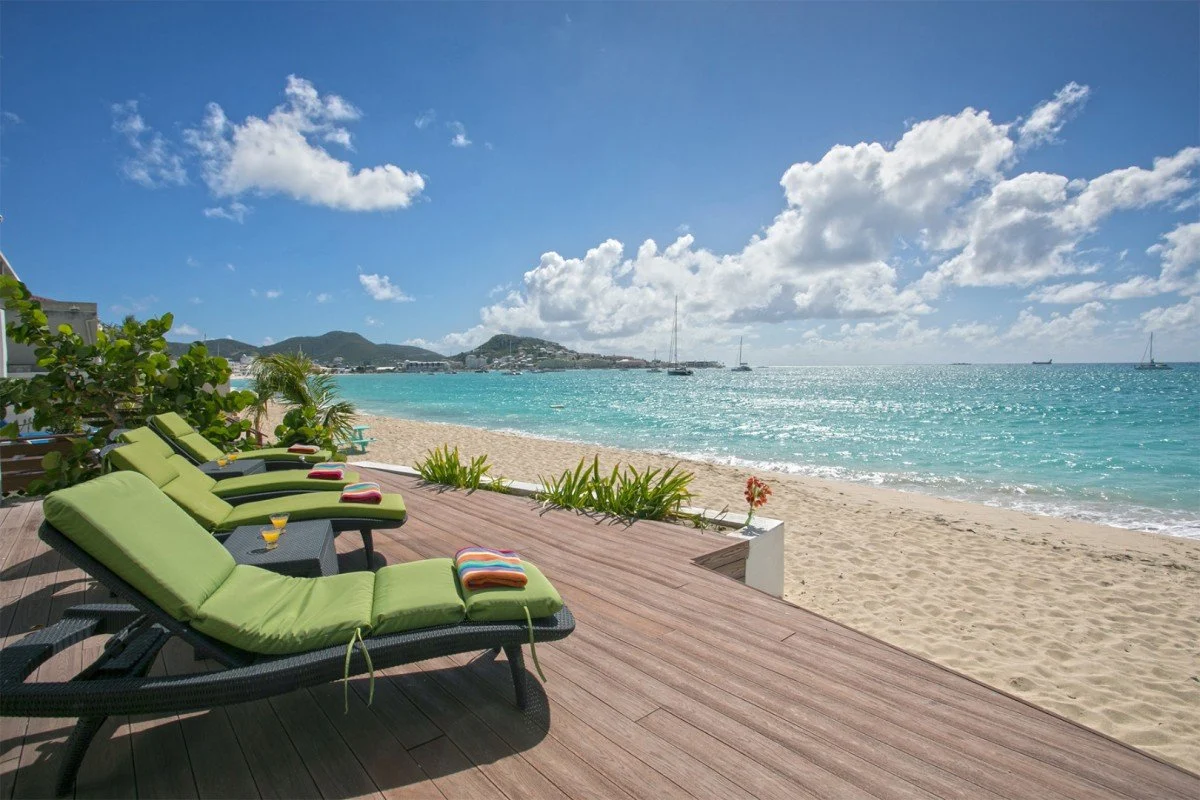
Visitors tend to describe the French side as quieter and more residential, with its dining concentrated in Grand Case and Marigot, long beaches such as Orient Bay and the Terres Basses coves, and the nature reserve and Pinel Island off the northeast coast. The Dutch side holds the international airport, the cruise port at Philipsburg, the lagoon marinas and nightlife of Simpson Bay, casinos, and the plane-watching beach at Maho.
Neither side suits everyone. The Dutch side is more convenient for arrival, English-language services and late-night options, but busier and closer to airport noise. The French side rewards travellers who want to eat well and drive to different beaches, but expect more French signage, euro pricing and quieter evenings outside Grand Case. Our guide to where to stay in St Martin compares the specific areas.
Planning the basics
Most international travellers arrive through Princess Juliana on the Dutch side; the smaller Grand Case airport on the French side handles regional flights from Guadeloupe, Martinique and St Barts. Both are explained in our guide to getting to St Martin. A hire car is the normal way to see both sides, since public minibuses are limited and taxis add up over a week.
Timing matters as much as geography. The dry season runs December to April, hurricane season is 1 June to 30 November, and some French-side restaurants close for annual holidays in September and October. Our guide to the best time to visit St Martin covers the seasonal detail.
In short, what is St Martin? One small island, two countries, one open border, and a trip that works best when you treat each side on its own terms: euros and French rules in the north, guilders or dollars and Sint Maarten rules in the south, and a car to move freely between them.